


By bilaterals.org
13 March 2026
On International Women’s Day 2026, the Canadian envoy stated that Canada is committed to ratifying its trade deal with Indonesia this year, which is described as a women-inclusive trade deal. However, this rhetorical embrace of gender equality conceals a deeper reality: the agreement is a sophisticated co-optation of feminist language to further neoliberal economic interests rather than a truly feminist economic justice agenda.
The myth of inclusion
The proponents of the trade deal (known as Comprehensive Economic Partnership Agreement or CEPA) praise Indonesia’s figure that women own 64,5% of the country’s micro, small, and medium-sized businesses (MSMEs), or approximately 37 million enterprises. They interpret this as proof of women’s empowerment and as the basis for the gender-inclusive approach of the deal. However, the economic realities of Indonesian women are essentially misrepresented by this narrative.
The large proportion of women-owned MSMEs is a reflection of women’s precariousness rather than an image of empowerment. Due to a lack of formal job opportunities or disproportionate caregiving responsibilities, women are forced into small-scale businesses that dominate the informal sector. These businesses usually have very low profit margins, little capital, restricted access to markets, and almost no social protections. The structural barriers that keep women in the most vulnerable sectors of the economy are hidden when this survivalist entrepreneurship is framed as “empowerment”.
The gender provisions of the CEPA are an example of what feminist scholars refer to as “inclusive neoliberalism,” which is the use of gender equality as a tool to legitimate and broaden market-driven economic policies. Global North countries and international organisations reinforce the very economic systems that sustain gender inequality while creating the appearance of progressive change through the use of gender language in trade agreements.
This trend is exactly what Canada does when it comes to the CEPA. In addition to leveraging the agreement to further Canadian corporate interests in Southeast Asia, the Canadian government presents it as a mechanism to “enable women-owned enterprises to gain better market access.” However this approach is contradicted by the fact that it honours women’s involvement in markets without questioning the gendered exploitation that these markets frequently rely on. Gender provisions in trade agreements tend to depoliticise deeper structural injustices rather than transform them.
Who benefits?
Millions of Indonesian women who own small businesses will not be the CEPA’s main beneficiaries, despite promises of gender inclusion. Rather, multinational Canadian exporters and Canadian corporations looking to expand their operations in Southeast Asia are the main beneficiaries of the agreement’s tariff reductions and market access provisions.
Given Indonesia’s US$970 million trade imbalance with Canada in 2025 and Canada’s imports approaching US$2.7 billion, it appears that Canadian corporations stand to benefit greatly from increased market access through the Canada-Indonesia agreement. In the meantime, without sufficient support systems, Canadian imports will pose a greater threat to Indonesian women producers, especially those in agriculture and informal manufacturing.
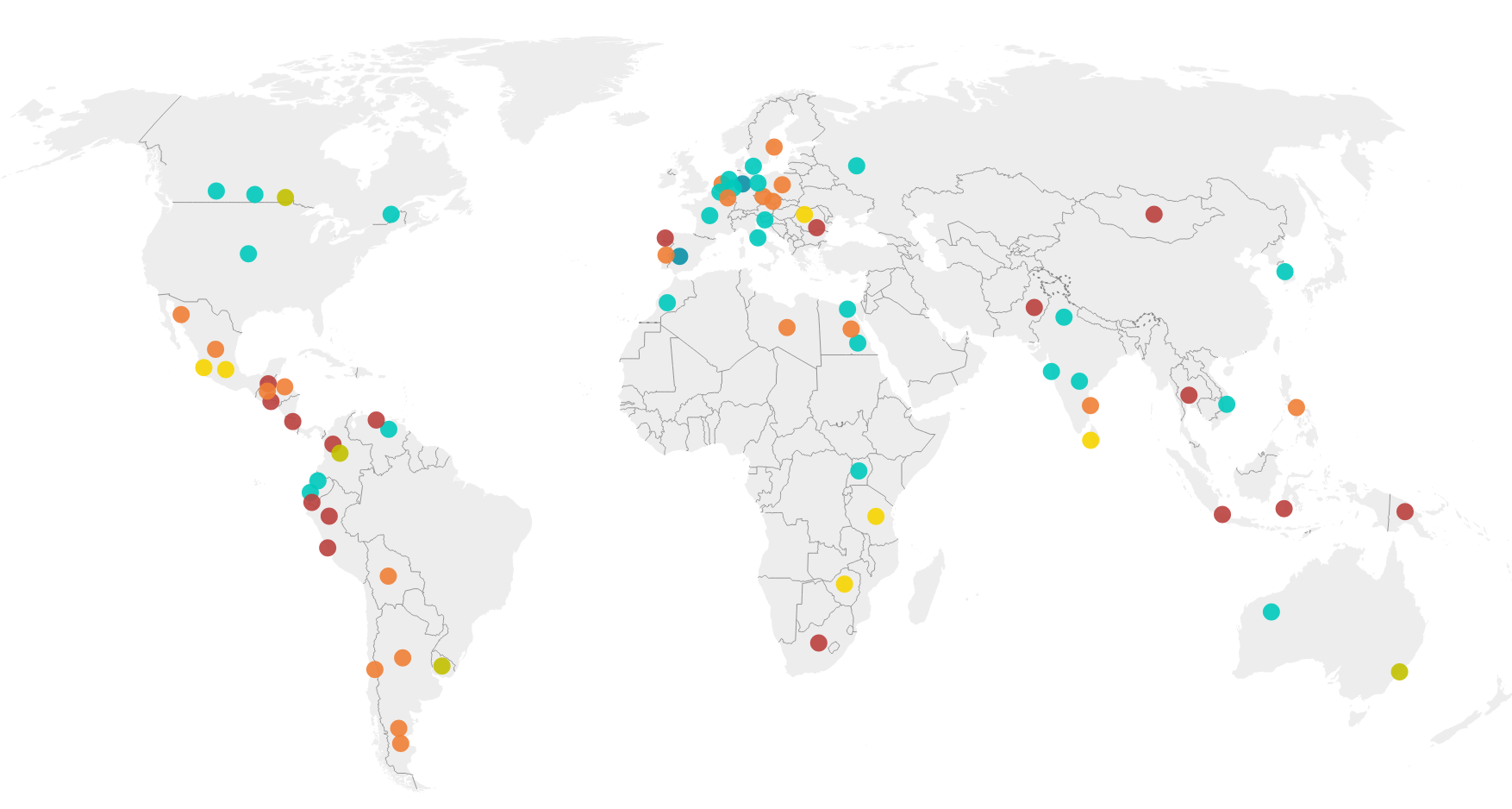
Furthermore, the CEPA establishes rock-solid investment protections for mining, energy, and forestry corporations by providing a powerful mechanism for corporations to challenge public policies and court rulings designed to protect health, the environment, and human rights. A controversial investor-state dispute settlement (ISDS) system that was recently criticised by two UN Rapporteurs for impeding progress of international climate goals and human rights is included in Chapter 13 of the agreement. With serious negative effects on women’s human rights, ISDS has developed into a powerful weapon used by multinational corporations to force governments to alter laws and regulations in their favour. The average cost of litigation and arbitration for an ISDS case is about US$ 8 million, but in certain situations, it might reach US$ 30 million. Elite law firms charge as much as US$ 1,000 per hour, per lawyer—with whole teams handling cases. Additionally, arbitrators also earn hefty salaries, amounting up to almost US$ 1 million in one reported case. Taxpayers cover these expenses, which are deducted from the national budget that could have been utilized to support women’s human rights and public services. And women tend to be more dependent on public social services, especially with the burden of unpaid care work falling disproportionately on women. For example, women in Asia perform four times as much unpaid care work as men do. Cleaning, cooking, and caring for dependent family members—children, the elderly, and those with disabilities—remain "women's affairs." The great majority of domestic workers are women, and they frequently receive inadequate compensation while working in hazardous settings.
Global North biases
Furthermore, Canada’s Gender-based Analysis Plus (GBA+) model solely takes into account the possible effects of trade liberalisation on women’s employment in Canada, which is subsequently used as a substitute for welfare. It lacks acknowledgments of the potential negative impacts of trade liberalisation. For instance, given Indonesia’s very weak enforcement of laws concerning the land rights of indigenous peoples, expanding trade in industries like mining and energy, where land rights issues are pertinent, may increase the danger of human rights abuses. Canada’s GBA+ included in the CEPA does not consider the possibility that trade and investment liberalisation could worsen conditions for women in Indonesia.
It is unacceptable for the Canadian government to promote a feminist foreign or trade policy that focuses only on the effects on Canadian women, while neglecting the effects on women and other marginalized groups in its trading partners. Therefore, the agreement remains silent on many critical issues for feminist economic justice: living wages, labour rights, environmental protection, land reform, and the democratisation of economic decision-making. These omissions expose the limitations of “gender-responsive” trade that operates within the neoliberal framework.
Moving beyond market-based approaches that exploit gender equality for corporate benefit is necessary for achieving true feminist economic justice. Trade policies should prioritise labour rights, environmental protection, food sovereignty, and care economies instead. Rather than relying on corporate lobbyists and trade negotiators, such policies should be created through democratic processes that centre the voices of women workers, small-scale producers, and caregivers.
Increasing women’s participation in markets is not the way to fight for gender equity. It requires changing the very systems that perpetuate and legitimise injustice and exploitation, such as the Indonesia – Canada CEPA. Until we confront this underlying issue, celebrations of “gender-inclusive trade” will continue to be pink-washing jargon that conceals the ongoing exploitation of women’s work and lives.
Further reading:
The Gender Turn in Trade Policy: Beyond Inclusive Neoliberalism
ISDS vs Women’s Human Rights
Profiting from Injustice