

Indonesia


Indonesia signed a major comprehensive FTA with Japan in 2007. In February 2012, it signed a preferential trade agreement with Pakistan which the two governments intend to turn into an FTA. But the Pakistan government has reportedly refused to start new negotiations until its concerns on the existing agreement are addressed.

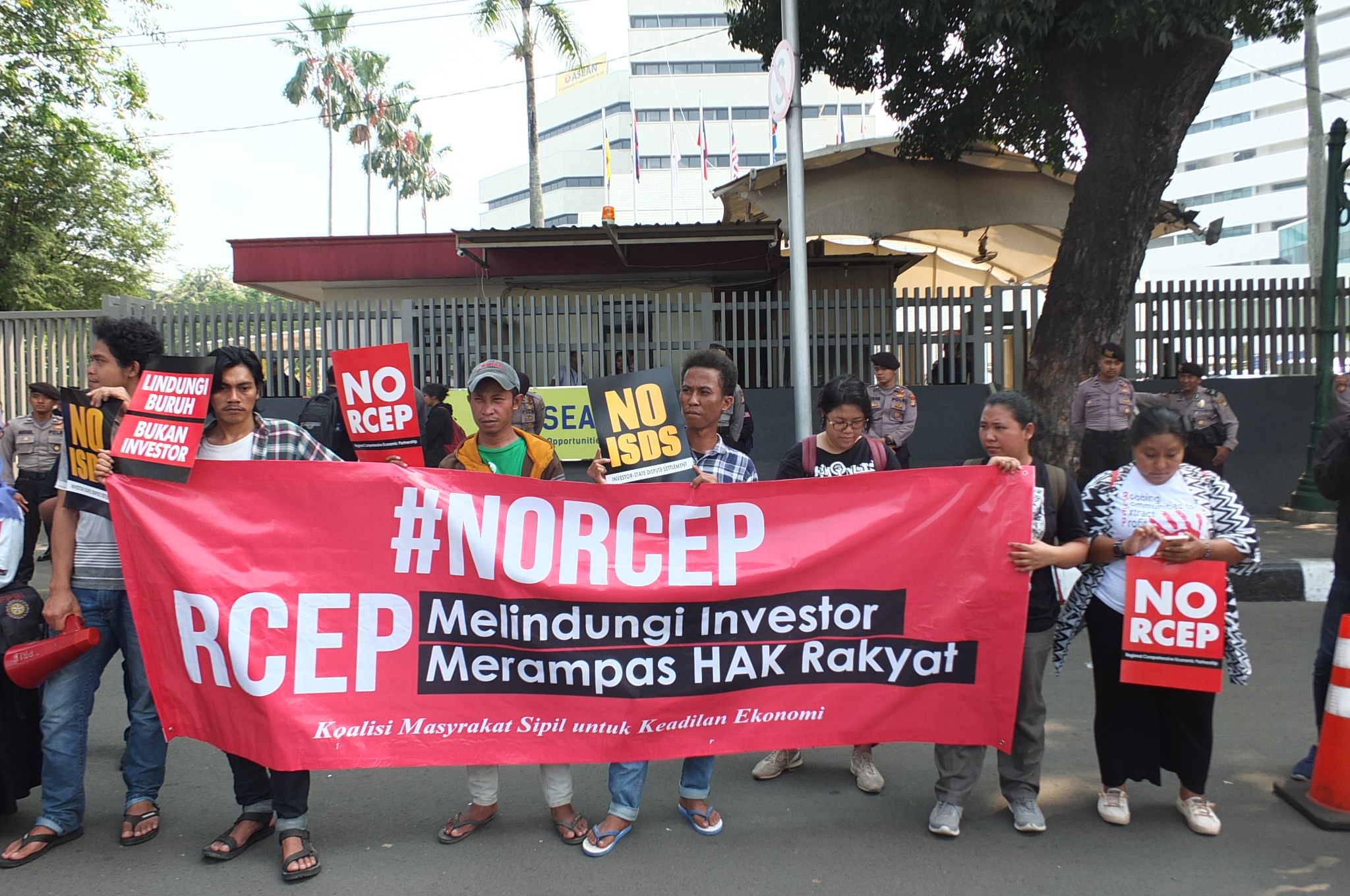
Right now, Indonesia is negotiating trade deals with Australia, Chile, EFTA (European Free Trade Area), the European Union, Korea, India and Ukraine. It has also expressed an interest to join the Transpacific Partnership (TPP) and to establish a free trade zone with the Eurasian Economic Union. Since 2012, Jakarta is part of the controversial Regional Comprehensive Economic Partnership (RCEP) talks with the nine other ASEAN (Association of South-East Asian Nations) governments and their six FTA partners: Australia, China, India, Japan, New Zealand and South Korea.

As member of ASEAN, Indonesia is also party to the group’s FTAs with Australia and New Zealand, China, India, Japan and Korea, as well as the ASEAN Economic Community.

Following a growing discontent against the investor-state dispute settlement (ISDS) mechanism, whereby foreign investors can seek compensation in an arbitration tribunal if new laws or regulations negatively affect their investment potential, Indonesia decided in 2014 to phase out 67 of its bilateral investment treaties. The government has terminated 20 treaties so far and has been developing a new model BIT that would supposedly reflect a more balanced approach between the country’s right to regulate and foreign investor protection.

last update: October 2016
Photo: IGJ


The Indonesia-US agreement: A ‘reciprocal’ trade deal that isn’t
In the 2026 Indonesia-U.S. Agreement on Reciprocal Trade, the phrase “Indonesia shall” appears more than 200 times. “United States shall” appears in just nine. The agreement may not hold up under international law.
A new US trade deal with Indonesia secures fossil fuels and access to critical minerals
A new trade pact between Indonesia and the United States has recast their economic ties, binding Jakarta’s resource wealth and energy future more closely to Washington’s strategic needs.
Empowerment or exploitation? The false promise of a women-inclusive trade deal
The Canada-Indonesia trade deal’s “women-inclusive” label masks a neoliberal agenda that benefits Canadian corporations more than Indonesian women. It exploits feminist language to legitimize market expansion, while reinforcing structural inequalities—especially the burden of unpaid care work on women—and enabling corporate power through costly investor rights (ISDS). True gender justice requires systemic change, not just market inclusion.
Indonesia–US Trade Agreement challenged in Court, civil society coalition warns of risks to economic sovereignty
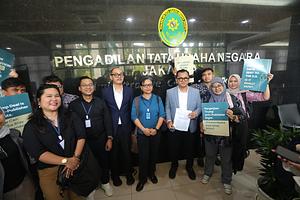
A civil society coalition consisting of CELIOS, the Alliance of Independent Journalists (AJI), Indonesia for Global Justice (IGJ), Solidaritas Perempuan, and supported by WALHI Nasional and Trend Asia has officially filed a lawsuit for Unlawful Government Act (Onrechtmatige Overheidsdaad) against the President of the Republic of Indonesia at the Jakarta Administrative Court (PTUN) on March 11, 2026.
US reciprocal tariffs is illegal, Agreement of Reciprocal Trade must not be ratified
The Civil Society Coalition for Economic Justice (Koalisi MKE) urges President Prabowo Subianto not to ratify the reciprocal trade agreement (ART) between Indonesia and the United States (US) signed on February 19, 2026. The 19% tariff reduction obtained by Indonesia in this agreement is not commensurate with the surrender of the country's sovereignty to US interests.
Indonesia-United States Agreement on Reciprocal Trade: a serious threat to national sovereignty and national interest - Indonesia for Global Justice
Indonesia for Global Justice (IGJ) firmly condemns and strongly opposes the Agreement on Reciprocal Trade (ART) between Indonesia and the United States, which threatens national sovereignty, narrows Indonesia’s policy space for national development, and places Indonesia in a position equivalent to being a subordinate to U.S. interests.
Indonesia, Uzbekistan launch Free Trade Agreement talks
Indonesia and Uzbekistan have launched Free Trade Agreement (FTA) negotiations, marked by a virtual signing of a joint statement and a Trade and Investment Cooperation Agreement.
New analysis of US-Indonesia trade deal in light of repealed tariffs
This so-called ‘deal’ is a one-sided neocolonial trap that locks Indonesia into binding, economy-wide concessions to benefit large U.S. corporate interests.
The Indonesia-US Trade Agreement on Reciprocal Tariffs threatens Indonesia's food and national sovereignty
Serikat Petani Indonesia (SPI) believes that the Indonesia-US ART has the potential to narrow the scope of national policy in protecting the agricultural and food sectors, has direct and fundamental implications for the direction of national agricultural policy, food sovereignty, and the livelihoods of small farmers, even threatening the sovereignty of the Indonesian state.
Critics warn US–Indonesia trade deal could undermine renewable energy push
A new trade agreement between Indonesia and the United States has sparked sharp criticism from climate advocates, who warn that a commitment to purchase up to USD 15 billion worth of American fossil fuels could undermine Indonesia’s renewable energy transition