

Washington to push Seoul on bilateral deal
By Alan Beattie in Washington
Barack Obama, the US president, will attempt to clinch an outline deal this week on a high-profile bilateral trade agreement with South Korea, in spite of opposition from part of the US automotive industry.
With the US campaign for international numerical guidelines for current account deficits hitting the buffers, an agreement on the trade pact with Lee Myung-bak, his South Korean counterpart, could represent Mr Obama’s only concrete gain from this week’s G20 heads of government meeting.
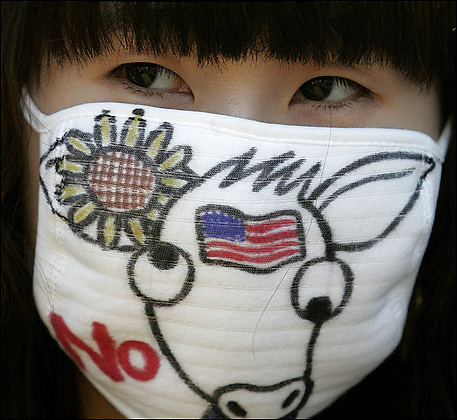
Ron Kirk, US trade representative, flew to Seoul to try to thrash out a deal over US access to the South Korean market, the agreement’s main sticking point. US beef exporters, previously vocal opponents of the deal, have moderated their position in an attempt to make a more gradual entry into Asian country.
Two of the “Big Three” US car companies, GM and Chrysler, are relatively comfortable with the deal; GM already has a majority stake in Daewoo, the Korean carmaker. But Ford, backed by the United Automobile Workers labour union, is strongly opposed to the pact, saying it gives insufficient protection against Korea using technical standards to block imports. Ford last week took out full-page advertisements in US newspapers to reiterate its opposition.
Jake Colvin, vice-president for global trade issues at the National Foreign Trade Council in Washington, a business association, said that the deal would be an early test of whether the White House would have a freer hand on trade issues now that the relatively pro-trade Republicans had taken over the House of Representatives. But he counselled caution.
“Enthusiasm is different from optimism,” Mr Colvin said. “We will push them to work together, but I am agnostic about whether it will turn out to be the case.”
The deal, negotiated by the administration of President George W. Bush in 2007, has not been put to a vote in Congress, thanks to domestic opposition. This week’s talks are likely to try to come up with a side letter about the car market rather than attempt to reopen fundamentally the draft deal, a course of action to which Seoul is vehemently opposed.
Marcus Noland, a Korea expert at the Peterson Institute of International Economics, said that the US had already won generous provisions, including a so-called “snap-back” clause allowing the US to reimpose import tariffs to protect its car industry should Korea be found to be violating the deal.