The Energy Charter Treaty (ECT) is a plurilateral investment agreement between 53 European and Central Asian countries. It was signed in 1994 and entered into force in April 1998.
About 30 countries around the world are at different stages of joining the ECT. Burundi, Eswatini (formerly Swaziland) and Mauritania are first in line, followed by Pakistan and Uganda.
The original objective of the ECT was to overcome the political and economic divisions between Eastern and Western Europe after the demise of the Soviet Union, as well as to strengthen Europe’s energy security. European countries wanted to secure the access to fossil fuel resources of the former Soviet countries by protecting foreign energy investments in these countries.
The ECT provides for an Investor State Dispute Settlement (ISDS) mechanism to resolve disputes between an investor and a member state. To this day, it is the world’s most widely used legal instrument for initiating ISDS arbitrations. It has been invoked by investors in 124 cases.
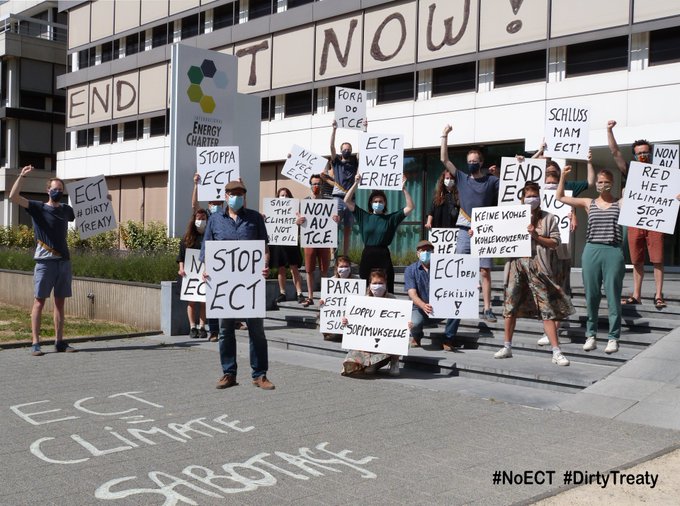
Critics argue that as with most other investment agreements, it places investors’ economic rights and interests over the social, ecological and economic interests of host states and their societies. The ECT imposes obligations on the host state but not on foreign investors. The ECT has also been condemned by environmental activists for protecting the fossil fuel industry and undermining serious climate action.
Spain has been subject to 45 arbitration disputes under the ECT after it implemented a series of energy reforms affecting the renewables sector, including a reduction in subsidies for producers. While some cases are still pending, Spain has already been ordered to pay over €800 million.
You can find out more about the Energy Charter Treaty on the