

Open Letter by Forum for Trade Justice
India’s trade policy shift in the EU and US trade deals: Serious implications for Indian citizens and its development pathway
The conclusion of the India–European Union Free Trade Agreement on January 27th and the announcement of an India–US trade deal US through Donald Trump’s Truth Social platform on 2nd February which was corroborated by the US-India Joint Statement released February 6th, represent a tectonic shift in Indian trade policy. These agreements promise substantial increases in Indian exports, driven by tariff reductions on around 90% of EU tariff lines and a cut in US reciprocal tariffs from 50 to 18 per cent. While these developments have been widely promoted as economic gains, serious concerns have been raised about both the lack of transparency in the negotiation process and the potential long-term consequences of the agreements.
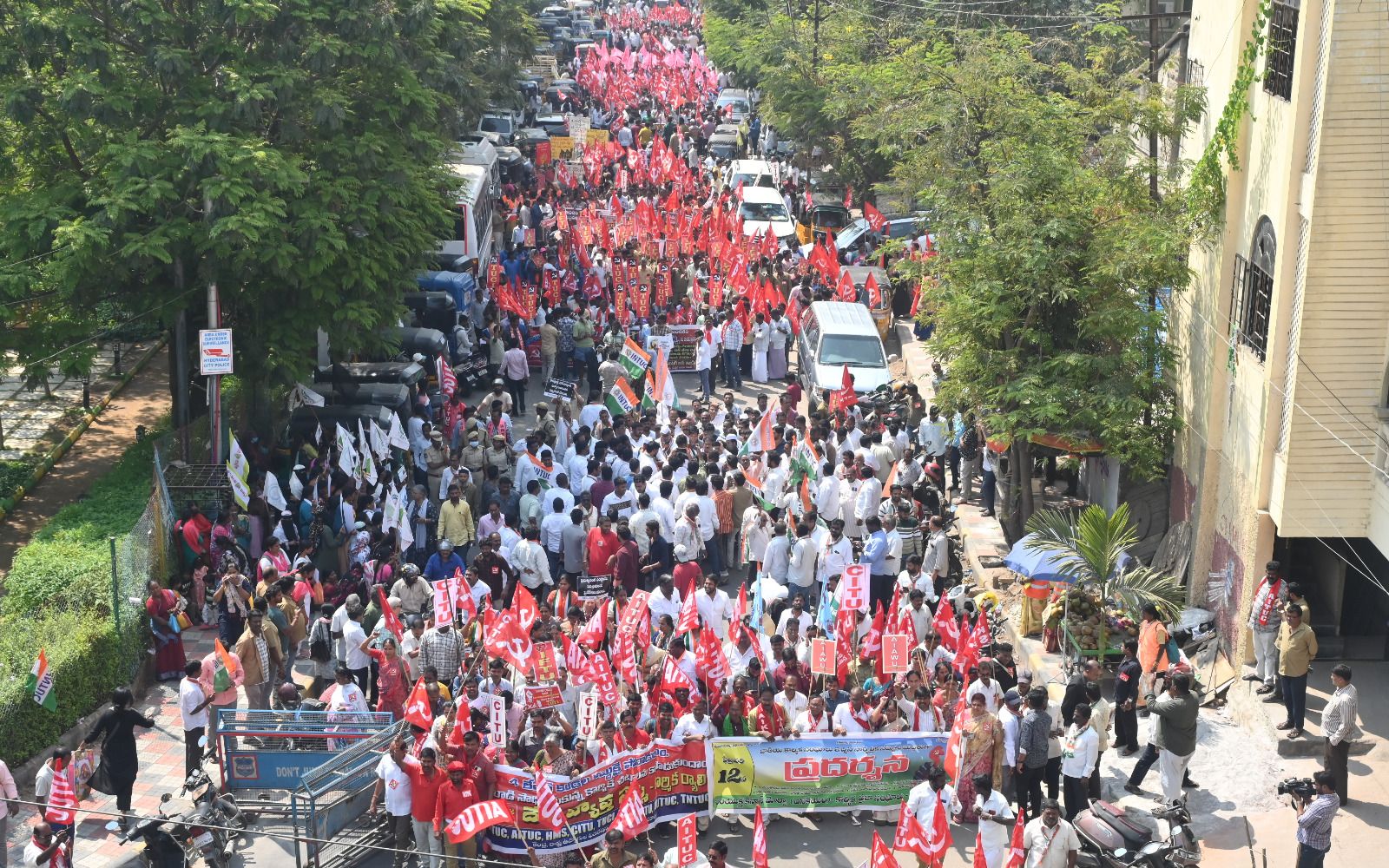
The Forum for Trade Justice, a coalition of farmers’ organisations, trade unions, traders, health and environmental groups, and other civil society actors, warns that the benefits of these deals may come at a significant cost. In exchange for tariff concessions, India is expected to further open its markets to the EU and the US, including sensitive sectors such as agriculture, manufacturing, and services. This could also significantly constrain India’s policy space and its ability to shape independent development pathways.
The Forum cautions that increased exposure to unequal import competition may undermine the livelihoods of farmers and MSMEs, weaken domestic manufacturing, limit the development of indigenous technologies. It also raises concerns about access to food, affordable healthcare, essential services, and the pursuit of sustainable and inclusive development.
A tectonic shift
While India had already started conceding its trade policy space under the recent FTAs with UAE, EFTA, UK and New Zealand, the latest agreements would throw open India’s domestic market on an unprecedented scale. From the limited information available on both these agreements, we outline below our area-specific concerns.
Agriculture and dairy
India’s recent trade negotiations with the United States and the European Union raise serious concerns regarding agricultural livelihoods, food security, public health, and long-term development. While India has reportedly shielded several sensitive agricultural sectors such as dairy and staples from tariff reductions under the EU Free Trade Agreement—providing relief to small and marginal farmers—the extent of market access commitments under the US trade deal remains unclear, particularly with respect to major cereals and genetically modified (GM) products.
In spite of assurances from the Commerce Minister that agriculture sector is protected, the US agreement may involve tariff cuts on critical products such as cotton, soybean oil, some oilseeds, and pulses. Such liberalisation could significantly undermine farmers’ incomes and expose them to unequal competition from subsidised US agriculture. Additional tariff reductions in emerging agro-processing sectors—including wines and spirits, beer, fruit juices, pasta, and confectionery—pose risks to employment and backward linkages with Indian agriculture, affecting millions of workers. The anticipated influx of ultra-processed and “junk” foods from both the EU and the US is also expected to exacerbate public health challenges in India. Further opening of markets to high-value products such as olive oil, apples, walnuts, and almonds, even on a quota basis, could constrain domestic production and threaten the future growth of these sectors.
India has also liberalised market access for US Dried Distillers Grains with Solubles (DDGS), which has already depressed prices of domestic DDGS and soymeal due to its substitution in animal feed and adversely affected Indian producers. The absence of robust risk assessment and biosafety protocols—including long-term toxicity, allergenicity, and inter-generational studies—raises serious concerns about the health implications of GM-derived DDGS. We strongly urge that imports of DDGS derived from GM crops should not be permitted.
The promised gains from increased agricultural exports under these agreements, much publicised by the Government, appear uncertain. The US’s imposition of an 18 percent tariff on Indian exports still represents a 7-fold increase compared to earlier MFN rates, limiting export competitiveness. Similarly, tariff concessions offered by the EU are likely to be offset by stringent non-tariff barriers, including sanitary and phytosanitary (SPS) measures, technical regulations (TBTs), and environmental requirements such as the EU Deforestation Regulation.
Dairy, a highly sensitive sector due to its central role in food security and rural livelihoods, remains apparently protected under the EU FTA. However, its status under the US agreement is unclear, with concerns that imports may be allowed through quota-based mechanisms. Additionally, US challenges to India’s dairy safeguard measures and socio-cultural standards—such as restrictions on non-vegetarian feed practices such as Rennet—could weaken domestic protections and expose Indian dairy farmers to intensified import competition.
The weaponisation of standards and technical processes
The European Union and the United States rely heavily on standards and technical regulations as non-tariff barriers in their trade agreements with India, posing serious risks to market access for Indian exports. The EU emphasised its “very stringent, science-based standards to protect human, animal and plant health” which Indian products “will have to respect”. The United States has imposed highly one-sided non-tariff barriers in its reciprocal trade agreements with countries such as Malaysia, Cambodia, Ecuador, and Thailand. These provisions typically force partner countries to accept US standards and regulatory processes while streamlining approvals for US exports, on a non-reciprocal basis. If extended to India, such measures could sharply limit India’s export prospects while allowing unfettered access for US products in Indian markets. Although India’s official position on non-tariff barriers remains unclear, US statements suggest that India may have conceded on both tariffs and regulatory barriers, raising concerns about the fairness and balance of these trade agreements.
Manufacturing
The trade agreements with the European Union and the United States require India to substantially reduce or eliminate tariffs across a wide range of manufacturing sectors, raising concerns about long-term industrial development and policy autonomy. A major concession involves the automobile sector, where tariffs on higher-value vehicles will be reduced from 110 percent to 10 percent under an annual quota of 250,000 cars, while tariffs on auto components will be phased out over five to ten years. These commitments mark a departure from India’s earlier strategy of using high tariffs to attract foreign direct investment, promote domestic value addition, and generate employment in a key manufacturing sector.
Concessions extended to the EU in automobiles, transport equipment, chemicals, plastics, machinery, ceramics, iron and steel, medical devices, and cosmetics are likely to be replicated for the US and potentially extended to other FTA partners under MFN obligations. This creates a trajectory of progressive and largely irreversible trade liberalisation. Additionally, India’s pledge to purchase USD 500 billion worth of goods from the US—potentially including aircraft, automobiles, fuel, and ethanol—could expose domestic manufacturers to intensified import competition and weaken flagship initiatives such as Make in India and the Production-Linked Incentive (PLI) schemes. The commitment on oil also implies India will switch to higher cost fuel imports from the US and eliminate cheaper Russian alternatives.
While Indian exports of automobiles, steel, aluminium, garments, leather, gems, and jewellery may receive tariff concessions in the EU, these gains are likely to be constrained by the persistence of non-tariff barriers. Measures such as the EU’s Carbon Border Adjustment Mechanism (CBAM), currently covering iron and steel, aluminium, cement, and fertilisers, threaten to erode expected export benefits. Meanwhile, the US’s imposition of an 18 percent tariff remains significantly higher than pre-2025 levels, resulting in a scenario where India offers extensive market access while continuing to face relatively high tariff and non-tariff barriers in return, coupled with continuing uncertainty.
Services
While services are not part of the current tranche of the US trade deal, the EU–India FTA includes major concessions in the services sector. According to a European Commission factsheet, India has agreed to “bind the current level of liberalisation for services sectors exceeding India’s commitments with any other trading partner, including the UK and Australia.” For the first time, India has also bound dredging and maritime cable-laying services, “satisfying key economic interests of the EU.”
Other concessions cover the liberalisation of financial services and the easing of India’s domestic rules on senior management, boards of directors, and local presence in service-sector companies, which will increase European presence and influence in joint-venture firms. Significantly, India has agreed to incorporate most of the rules under the WTO Domestic Regulation Joint Initiative, which it had consistently opposed. These commitments mark a departure from India’s WTO stance and will severely limit its policy space to design domestic regulations in the services sector.
Digital economy
The e-commerce and digital trade provisions in India’s recent trade agreements with the EU and the US lack transparency and raise serious concerns for India’s digital policy autonomy. According to the EU, the e-commerce chapter of the EU FTA incorporates many elements of the WTO e-commerce Joint Statement Initiative (JSI), which India has consistently opposed in order to preserve its policy space for developing its digital sector.
India has traditionally treated software source code disclosure and unrestricted cross-border data flows as red lines in digital trade negotiations. While India has already conceded on source code disclosure in the India–UK FTA, similar concessions appear in the EU FTA, albeit with greater flexibility that allows India to regulate specific categories of software if used effectively. A positive aspect of the EU FTA is the absence of commitments on free flow of data and access to open government data. However, this stance is vulnerable in negotiations with the US and must be protected in future agreements.
Although details of the digital chapter in the US deal remain unknown, concerns arise from US efforts in other agreements to push for a permanent WTO moratorium on customs duties on electronic transmissions. Apart from the loss of policy space to develop domestic e-products, a South Centre study shows that India lost 1.4 billion USD in 2020 and 4.5 billion USD between 2017-2020 in potential tariff revenue on account of the current 2-yearly moratorium. Additional US demands, such as removing domestic digital taxes on US tech firms, would further erode policy space and public revenues needed for addressing development and climate priorities.
Intellectual property rights and access to medicine
The intellectual property (IP) provisions in India’s recent trade negotiations with the European Union and the United States have raised serious concerns due to limited transparency and potentially far-reaching consequences for public health, agriculture, and policy autonomy. The EU has long sought TRIPS-plus commitments such as data exclusivity, patent term extensions, and stronger enforcement measures. Official references in the EU FTA to a “high level of protection and enforcement” of IP rights and closer alignment with international IP treaties suggest that India may have accepted obligations beyond its existing TRIPS commitments.
The United States has historically demanded data exclusivity and the weakening of safeguards against patent evergreening, including Section 3(d) of India’s Patents Act. Although it remains unclear whether IP-related commitments were included in the current India–US agreement, similar demands are likely to emerge in future negotiation phases.
Of particular concern is the possible requirement for India to accede to international agreements such as UPOV 1991 either by the EU or the US. UPOV restricts farmers’ rights to save and reuse seeds, and joining it would necessitate repealing India’s current plant variety protection law, which recognises and protects farmers’ rights. Such a shift would have serious implications for agricultural livelihoods and seed sovereignty.
Given these risks, there is an urgent need for full disclosure of the IP chapters in both agreements. Accepting TRIPS-plus provisions would undermine India’s pharmaceutical industry, restrict access to affordable medicines and seeds, and threaten the constitutional right to health under Article 21.
The great unknowns
Most of what is covered under the US deal is still not known. But even under the EU FTA, there is no public information on crucial areas such as government procurement (GP), energy and raw material, Geographical Indications (GI) and investment, which we know were being negotiated. We are extremely concerned that these are being parallelly negotiated and will be announced on a later date. Concessions in GP could compromise domestic Indian development policy related to MSMEs and small-scale producers; concessions in energy and raw material could undermine the development of renewable energy and allow unfettered outflow of critical raw material; and recognizing EU’s GIs could severely limit the growth of food processing industries. We urge the government to make these negotiations public so the complete impact of these trade agreements can be assessed clearly.
These trade deals conflict with India’s WTO positioning, are aided by domestic policymaking and concede sovereignty
India’s recent trade commitments with the EU and the US raise serious concerns as they appear to contradict its long-standing positions at the WTO. These include principles such as Most Favoured Nation, special and differential treatment for developing countries, opposition to a permanent e-commerce moratorium, resistance to plurilateral agreements and Joint Statement Initiatives, particularly on e-commerce and services regulation, and safeguards on intellectual property. Simultaneously, India has initiated domestic legal and policy changes to align with FTA partner demands, including amendments to IP laws reflecting TRIPS-plus standards. Autonomous liberalisation is also underway across strategic sectors such as aviation, defence, nuclear equipment, medical devices, and pharmaceuticals, significantly reducing India’s policy space.
What is also very alarming in the India-US joint statement is language on aligning trade and economic policies in relation to other countries implying India would be forced to align with US positions. Indonesia, Malaysia, and Cambodia have signed on to some very explicit language on it. This is open neo-colonialism, with subject countries also tying their foreign relations to that of a superpower. The Forum is very concerned about such possibilities.
A veil of secrecy surrounds such deals
In spite of the announcement of full conclusion and the expansive coverage of the “mother and father of all deals”, the texts of these agreements are not in the public domain. This makes impact analysis difficult, especially by civil society groups and grassroot organisations many of whose interests are intrinsically linked to the commitments India has made in these deals. If these deals are already finalized, the full texts, associated schedules of commitments, annexes must all be immediately placed in the public domain to enable scrutiny by stakeholders and the Indian Parliament.
What lies ahead
It is evident that India’s trade policy has undergone a historic shift in the last few months, epitomized by its commitments in the two recent agreements. By accepting the diktats of its FTA partners, India seems to have given up its role as a champion of development agenda in multilateral forums, and its urgings that developing countries must be able to make their autonomous policy choices for the betterment of their domestic constituencies, including, small farmers and MSMEs.
We urge the government of India to retain its policy sovereignty, its dignity and righteousness to deliver a better future for its people. Its trade policy should be for the betterment of the lives of all its citizens, especially the most marginalised and vulnerable, and not for serving the interests of the corporates and the elites. India must pursue a transparent, democratic, sustainable and just trade policy that can be a trailblazer in the world, which it once did.
The Forum for Trade Justice
For more information contact:
K M Gopakumar 9372927647
Parminder Jeet Singh 9845949445
Ranja Sengupta 9811368168