


Do trade deals put public health care up for sale?
by Andrew Longhurst and Stuart Trew
In their defining 2004 book on health care privatization and trade agreements, CCPA researchers Jim Grieshaber-Otto and Scott Sinclair warned about the incompatibility of Canada’s public health system with rules establishing globalized “free” markets for health services.
“Canada’s medicare system is at odds with the principles of so-called free trade treaties,” they wrote. “By establishing a public sector health insurance monopoly, and by regulating who can provide health care services and on what terms, the Canada Health Act and the medicare system cut against the grain of trade and investment liberalization.
While governments routinely assure Canadians that the health care system is safe under these powerful trade treaties, in fact, it is “only partially shielded from their force.
These concerns are more relevant today than ever—and they take on greater urgency in light of Alberta’s recent introduction of two-tier health care legislation.
Alberta’s new legislation opens the door for doctors and private facilities to charge patients directly for health services covered under the Canada Health Act. It also paves the way for a private health insurance market for basic health services, no longer leaving the private health insurance market in Canada to employer-sponsored extended health plans.
In December, the Alberta government passed Bill 11, which introduces dual physician practice whereby physicians can bill the public insurance plan while also requiring patients to pay privately. Physicians no longer must decide between working in the publicly funded system or the private-pay market; they can work in both simultaneously.
Dual physician practice is the method to achieve a two-tier health care system where the wealthiest can pay for preferential access—and a for-profit health care industry can flourish.
Trade agreements put public health care at risk
Canada is a signatory to over 100 trade and investment treaties. These agreements guarantee foreign private services firms broad market access and national treatment (i.e., the same treatment as Canadian firms) in the Canadian market, except where Canada has taken exceptions to the rules.
For example, the General Agreement on Trade in Services (GATS) at the World Trade Organization (WTO) excludes services provided in the “exercise of governmental authority.” The agreement clarifies that this means “any service which is supplied neither on a commercial basis, nor in competition with one or more service suppliers.”
Alberta’s two-tier reforms erase the line between the public and private health sectors. As provinces encourage the growth of for-profit medical insurance, it will not be possible to control the spread of U.S. or other foreign firms, which will be entitled to the same subsidies and advantages the government provides to public, not-for-profit entities.
Although GATS and other Canadian free trade deals, including CUSMA, partially exempt public provincial health systems from trade liberalization and foreign investment, Canadian health care is not fully protected if these corporations gain a foothold in the health care market. This could happen in several ways.
First, foreign for-profit health care providers, such as U.S. hospital chains, could seek entry into provincial health systems by successfully bidding on contracts for publicly funded and privately delivered (outsourced) surgeries and diagnostic procedures. Provinces could also directly award contracts, should they wish.
Alberta Premier Danielle Smith has already stated at a private United Conservative Party event that she envisions the government leasing health facilities to third-party operators. These could very likely be U.S. or foreign corporations looking to expand into both the publicly funded and private-pay delivery markets.
These threats are real. The 2023 CCPA report At What Cost? documented U.S. investment interest in provincial outsourcing markets. U.S. and foreign investors in publicly funded and private-pay health care delivery would likely look to investment opportunities in Alberta under the province’s new plan for two-tier health care.
Already, two U.S. corporations own the majority of community blood clinics and laboratories in Canada, including New Jersey-based Quest, which owns LifeLabs, and Dynacare, owned by North Carolina-based Labcorp of America. Another multinational player, Grifols, is a Spain-based corporation that has an agreement with Canadian Blood Services to operate paid-plasma clinics across the country. Recently, two people died after giving plasma in their clinics.
A second avenue for foreign and U.S. interests to enter the Canadian market is by offering private health insurance products for medically necessary physician (and physician-equivalent) services and hospital services insured under the Canada Health Act and provincial legislation.
Based on developments in Alberta, it is no longer unthinkable that U.S. private health insurers—looking to expand into new markets—would begin to offer new insurance products to Canadians in order to obtain queue-jumping insurance.
In a recent CCPA webinar, David Himmelstein and Steffie Woolhandler, leading scholars on the U.S. health care industry, commented that U.S. private health insurers are looking for new markets and many are already active in South America.
These insurance companies would likely first target their products at large employers and unions, to add private coverage for workers to obtain faster access to elective surgeries and diagnostic procedures. Expansion by offering queue-jumping insurance products for individuals would likely follow, but would represent a much smaller market, at least initially.
Canada is situated next to the largest for-profit health care industry in the world. Increasingly, it is a vertically integrated industry with corporations involved in both private health insurance and health care service delivery. This means that allowing any U.S. investment into the country risks inviting both private health insurers and for-profit providers to become a permanent fixture in Canada’s provincial health systems.
Once invested in Canada—likely via Alberta—these corporations would have access to strong trade and investment treaty protections, including potential legal recourse, should provincial governments try to regulate them in an attempt to protect patients against poor quality care and also maintain Canadian control over public medicare.
The threat of investor lawsuits
On top of the trade-based risks from opening Canada to further health privatization, Canada is party to dozens of bilateral investment treaties (and investment chapters within free trade treaties) granting foreign investors the power to sue the government for actions that may affect their private investments.
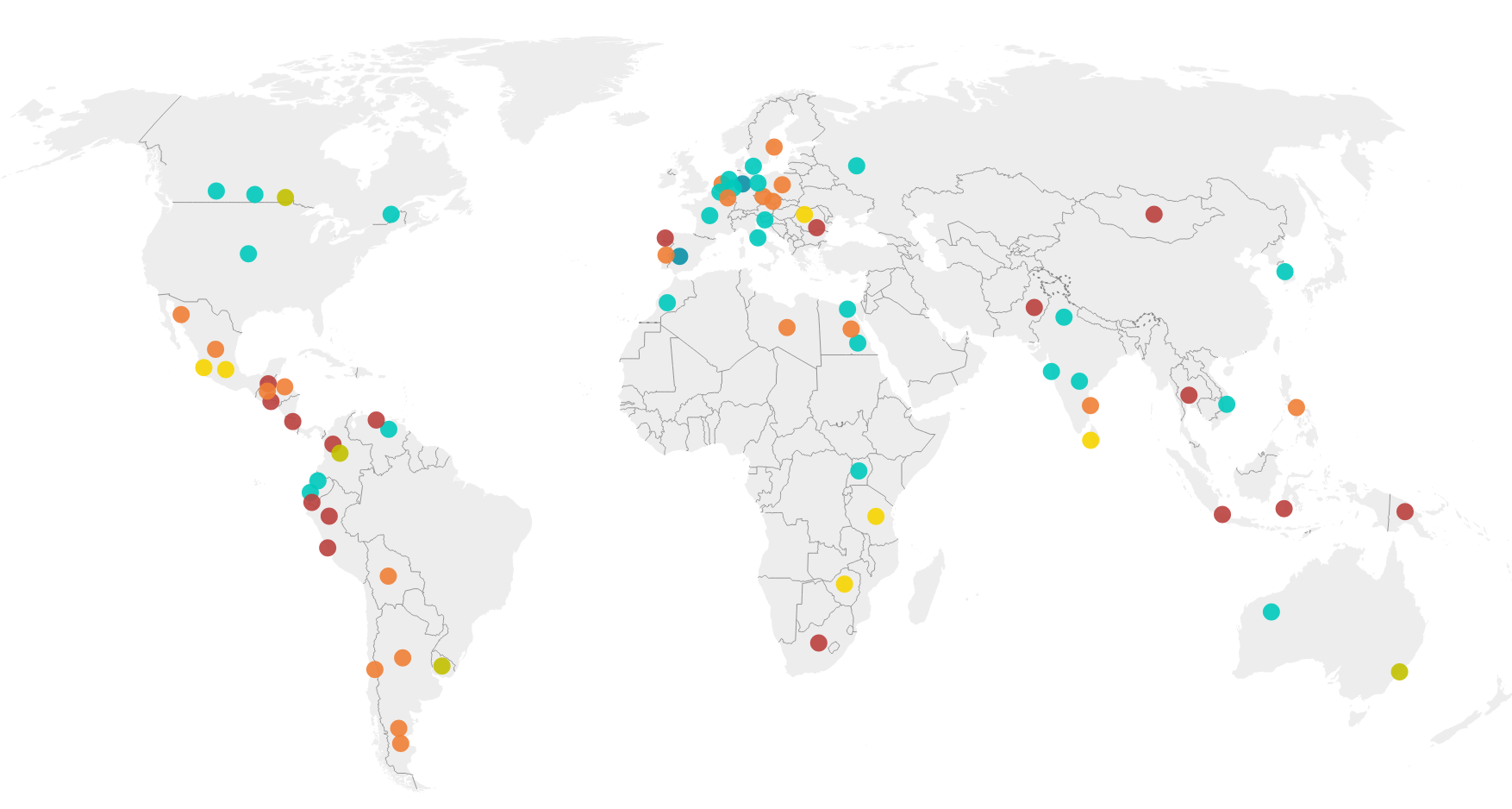
Canada was routinely sued by U.S. firms under the expired investor-state dispute settlement (ISDS) system in NAFTA, with cases frequently challenging non-discriminatory environmental and public interest decisions. There have been a number of international ISDS cases involving health services and public health.
Newer Canadian investment treaties include a weak “right to regulate” clause that does not block investment tribunals from scrutinizing regulatory measures for their effect on investor profits. Importantly, it is not possible in any of these treaties to shield public policies or actions against investor allegations that they breach the so-called minimum standard of treatment or wrongly expropriate their investment.
Examples of health-related ISDS cases include a series of lawsuits against Slovakia following legislation, in the late 2000s, requiring health insurance firms to operate on a not-for-profit basis and a 2024 case against Colombia from a Spanish health insurer challenging the government’s decision to put the firm under administration due to concerns over its financial viability.
Indeed, the Canada Health Act was put on notice in a 2009 ISDS claim against Canada under NAFTA related to a U.S. investor’s inability to set up private fee-for-service health clinics in Vancouver and Calgary. The case was dropped but only because the investor failed to make a deposit, as required.
While Canada and the United States smartly removed ISDS from the renegotiated CUSMA, similar investor protections exist in dozens of agreements, including the 12-country Trans-Pacific Partnership (CPTPP), which involves the United Kingdom and Australia.
The first, and so far only, established ISDS case under the CPTPP is from an Australian coal magnate, who is demanding $2 billion from Canada in a dispute related to the establishment of a national park overlapping their mining licences in Alberta. Previously, a Quebec pension fund threatened Mexico with a CPTPP investor-state lawsuit for energy reforms prioritizing public electricity delivery in that country.
What can be done to protect medicare?
The health care landscape has fundamentally shifted since the WTO-GATS and NAFTA were negotiated in the 1990s. The introduction of two-tier health care and associated investment opportunities invite significant new threats to the not-for-profit character of Canada’s health care system.
Therefore, it is very important that CUSMA retain the partial health care and public services exemption and continue to exclude investor-state dispute settlement. There are no signs yet that the Trump administration will pressure Canada about the health exception, but business groups are lobbying to reintroduce ISDS. We can’t afford to let that happen.
Though it does not pertain to health care privatization, the Trump administration, backed by U.S. pharmaceutical companies, may also use the CUSMA review to force Canada to change or abandon drug pricing rules aimed at controlling public health costs from prescription medicines.
The lobby group PhRMA’s submission to the United States Trade Representative’s Special 301 Consultations—related to alleged intellectual property rights barriers in trading partner countries—is 17 pages long. Recent U.S. trade agreements with Ecuador and Argentina commit those countries to address every U.S. complaint in the 2025 USTR Special 301 report. Canada and Mexico will almost certainly come under similar coercion related to pharmaceutical patents and drug pricing policy.
To summarize, the introduction of a parallel, private-pay system in Alberta based on private health insurance and out-of-pocket payment represents a fundamental change to Canada’s public health care system. Alberta would have a difficult time restricting the newly created market to Canadian firms, even if the government wanted to, and once foreign investors become entrenched, they will benefit from the full force of Canada’s international trade obligations. This will make it very difficult for Canada and the provinces to reverse course.
The trade and investment treaty risks related to Alberta’s health system privatization are yet another reason why this decision cannot be the province’s alone to make.