



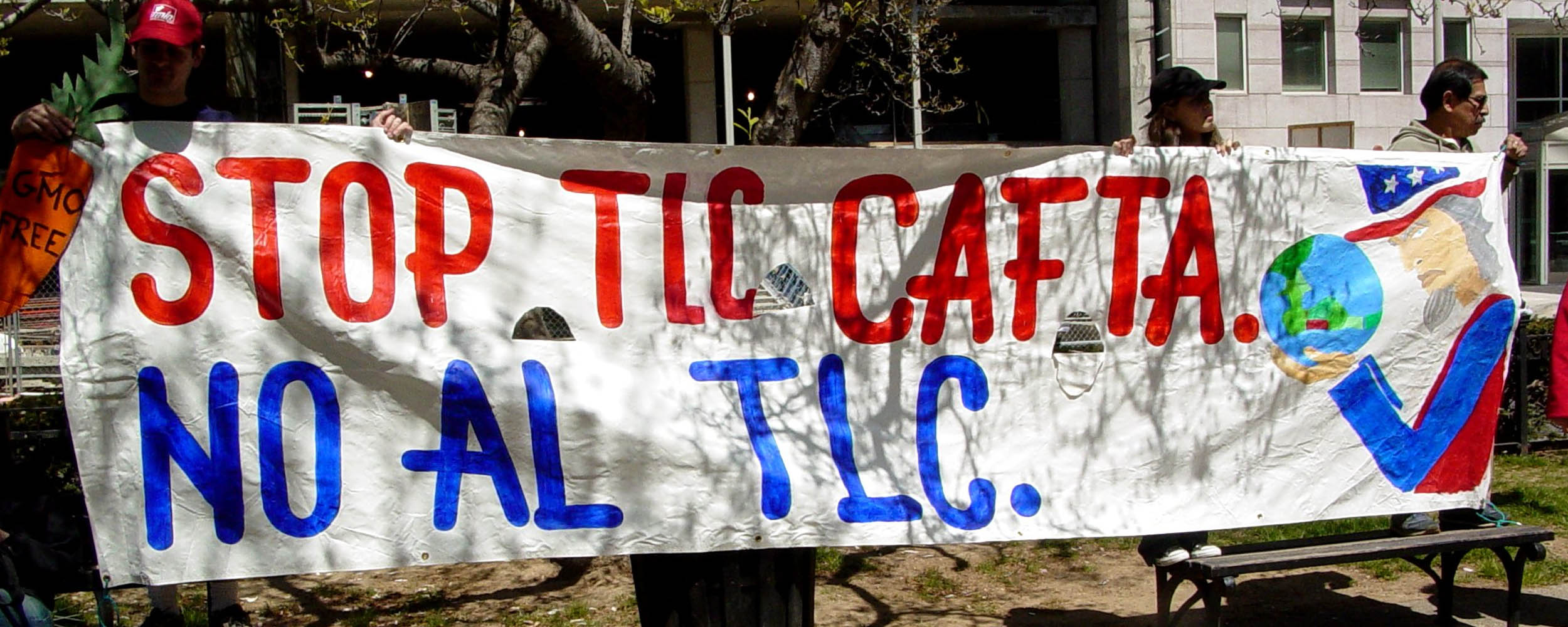
US-DR-CAFTA


The US-Central America Free Trade Agreement, commonly referred to as “CAFTA,” was signed in December 2003 after twelve short months of negotiation. The negotiations involved the US, Costa Rica, El Salvador, Guatemala, Honduras and Nicaragua. Costa Rica at first refused to join the agreement, then changed its position in late January 2004. The US separately negotiated a bilateral treaty with the Dominican Republic, with a view to folding the deal, and the country itself, into the US-CAFTA scheme.

The US-CAFTA was signed late May 2004, and the Dominican Republic became an additional party to it in August 2004. Since then, the accord has been officially renamed the “United States-Dominican Republic-Central America Free Trade Agreement” or US-DR-CAFTA. But the overall agreement -- which a lot of people continue calling just “CAFTA” -- still needs ratification by all parties to go into force.

CAFTA is a wide-ranging agreement covering many areas: agriculture, telecommunications, investment, trade in services (from water distribution to gambling), intellectual property, the environment, etc. It essentially serves US business interests by giving them a concrete and high-level set of rights to operate in Central America. Some US sectors, such as sugar producers, feel threatened by the treaty. But by and large, the threats are mainly against the Central American countries which signed on, as it opens the depths of their economies -- public and private -- to the interests and power of US companies.

In July 2005, US Congress approved the DR-CAFTA and Bush signed it into law in early August. The Central American parliaments eventually also approved it. For the Dominican Republic, the treaty took effect in 2006.

Costa Rica was the Central American country with the strongest resistance to DR-CAFTA. There were large public demonstrations and information campaigns, and a broad grouping of civil society organizations, from trade unions to small farm organizations, signed on. This coalition successfully pushed for a referendum on ratification, which was held on 7 October 2007. The result: 51.62% in favour and 48.38% opposed. The result was considered binding since more than 40% of the electorate voted. In view of these results, CAFTA was ratified.

On December 23, President Bush issued a proclamation to implement the DR-CAFTA for Costa Rica as of 1 January 2009.

last update: May 2012
Photo: Public Citizen


CAFTA's October referendum: A death sentence for Costa Rican foreign investment?
With a little under two months until the October referendum on the Dominican Republic-Central American Free Trade Agreement, time is quickly running out for Costa Rican president Óscar Arias to gain the necessary public support to pass CAFTA. The trade pact is strongly opposed by those who believe that it will not help the Costa Rican economy, while being significantly beneficial to the US.
Costa Rica urged to fess up FTA survey
The Pro-Liberation Front against the Central America Free Trade Agreement-Dominican Republic (CAFTA-DR) demanded the Costa Rican government publish results of a poll it commissioned about the level of public support for the agreement.
Costa Rica opposition leader calls for renegotiation of Cafta
The top opposition leader in Costa Rica said he wants to renegotiate a free-trade agreement with the US, citing as a precedent the US revamping of a similar agreement with Peru.
Anti-CAFTA camp protests outside tribunal
Leaders of the movement against the Central American Free-Trade Agreement with the United States (CAFTA) spoke to about 200 people yesterday outside the Supreme Elections Tribunal in San José.
Guatemala and Costa Rica: in and out of CAFTA
The growth in exports being celebrated by the Bank of Guatemala has nothing to do with CAFTA.
Guatemalans say US free trade costly
One year after CAFTA-DR took effect in Guatemala, the Guatemalan Social Organizations Collective (COS) presented evidence on Wednesday that its alleged benefits are deceptive and false.
Dominican Republic has yet to fully access Dr-Cafta trade deal
Dominican Republic still has some 10 commitments pending to fully access the Free Trade Agreement signed with the United States and Central America (DR-CAFTA), and for that reason confronts a situation defined as "serious" against its other competitors.
Costa Rica, free trade fewer jobs
Costa Rica's PAC party (Citizen Action) president Otton Solis has warned of the potential increase in unemployment if CAFTA-DR, the free trade treaty with the United States, is approved.
Dominican Republic is ratified as head of Customs group for the Americas
Dominican Republic was ratified as country president of the Intellectual Property Work Group for the American Hemisphere, in recognition of the Customs Agency's (DGA) work in copyrights, as the DR-CAFTA trade agreement and international treaties stipulate.
Anti-CAFTA leaders launch offensive
Leaders of the National Coordinator for the Fight Against CAFTA announced plans yesterday to hold demonstrations outside the Supreme Court, the Supreme Elections Tribunal, and the Legislative Assembly on Thursday.

