

EU-India


The European Union and India launched negotiations on a bilateral free trade and investment agreement in June 2007. However, between the governments, a number of controversies have been plaguing the talks. Delhi wants Brussels to relax its stringent food safety criteria which penalise Indian farm and fishery exports and to make it easier for Indian professionals to work in the EU. Europe is primarily out to win major openings of India’s services sector and broad liberalisation of foreign investment, while India does not want to discuss allowing European firms to compete in India’s government procurement market.

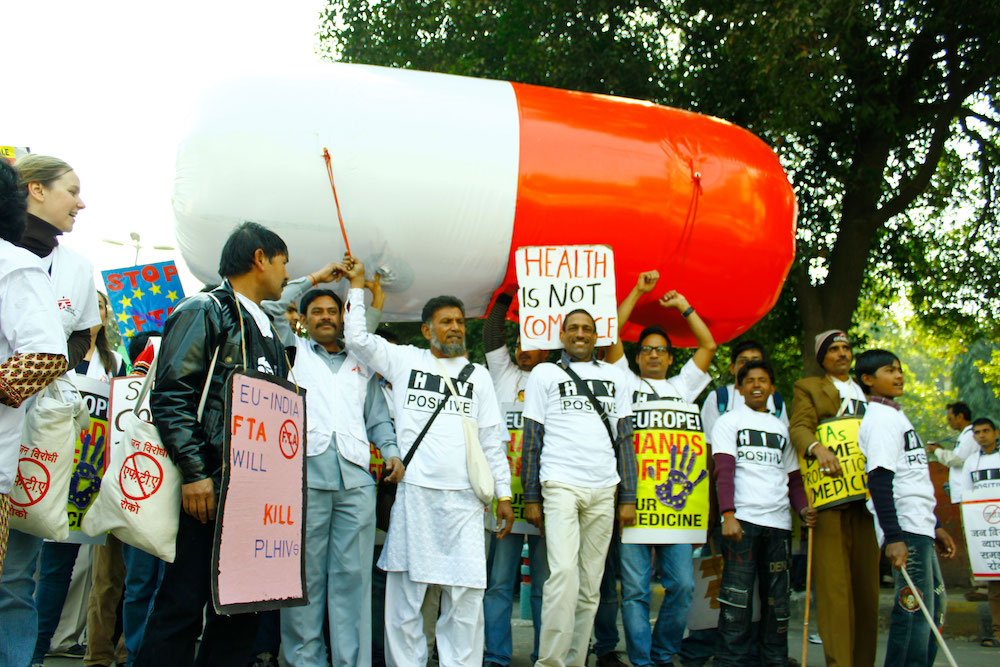
Indian social movements, including fisherfolk and labour unions, people living with HIV/AIDS and other health activists have been mobilizing against the FTA. International actions and campaigns have particularly targeted the proposed intellectual property provisions of the agreement, and the impact of the FTA on access to medicines.

last update: May 2012
Photo: MSF


Latest round of India-EU FTA talks see limited progress, 'better clarity' on industrial, farm goods
The thirteenth round of talks between India and the European Union for the proposed trade deal has seen little progress in sensitive sectors such as automotives and agricultural products, though both sides have cited better clarity on their market access demands for industrial and farm goods.
Indonesia backs CEPA talks with Mercosur to boost trade
Indonesia, through Trade Minister Budi Santoso, has reiterated its strong support for advancing negotiations on a Comprehensive Economic Partnership Agreement (CEPA) with Mercosur, the South American trade bloc comprising Argentina, Brazil, Paraguay, Uruguay, and Bolivia.
Early harvest deal a target as India, EU speed up FTA talks
India and the EU are fast-tracking FTA talks with an interim “early harvest” deal likely by year-end. With 60–65% chapters agreed, both sides push for market access, visa relaxations, and clarity on carbon tax exemptions amid global trade uncertainty.
India, EU committed to early conclusion of FTA: Goyal
India and the EU have reiterated their shared commitment towards early conclusion of the bilateral Free Trade Agreement, India Commerce Minister said that 60-65 per cent of the chapters had already been finalised.
India-EU FTA talks begin in Delhi; focus likely on market access, non-tariff barriers
India and the European Union are set to hold the 13th round of talks for a Free Trade Agreement in New Delhi beginning Monday, marking a critical step towards finalising the trade pact by the end of this year.
German FM in Delhi: no Russian oil ‘Detours’, pushes EU-India FTA by year-end
Germany reaffirms strong support for the EU-India Free Trade Agreement, seeking to boost bilateral trade from €31 billion to €60 billion, and urges dialogue over tariffs, calling predictability and partnership vital in uncertain times.
India, EU to conclude FTA talks by year-end, pending issues may need political call: Govt sources
India and the EU are pursuing a two-stage approach to finalise an FTA, apart from a bilateral investment protection agreement and recognition of geographical indications (GIs) with the 27-member bloc.
India, EU resolve digital differences in free trade agreement talks
India and the European Union (EU) have reached an in-principle agreement on the contentious digital trade chapter, marking a key step toward concluding a free trade agreement, though “substantial differences” remain over trade and sustainable development provisions.
India-EU trade talks: Optimism in the air as next round scheduled for September — what is on the table?
India and the EU are preparing for FTA negotiations in September, following the 12th round of talks in Brussels. Key discussion topics included services and market access. Both parties aim to finalise the agreement by year-end, potentially increasing India's competitiveness in EU markets.
India-EU FTA nears completion, says Goyal; focus now on non-tariff barriers
The focus of India and the EU negotiation is now on easing regulatory hurdles to facilitate smoother trade, especially for key Indian exports facing high EU barriers, such as chillies, tea, Basmati rice, and dairy products.