


EU-India


The European Union and India launched negotiations on a bilateral free trade and investment agreement in June 2007. However, between the governments, a number of controversies have been plaguing the talks. Delhi wants Brussels to relax its stringent food safety criteria which penalise Indian farm and fishery exports and to make it easier for Indian professionals to work in the EU. Europe is primarily out to win major openings of India’s services sector and broad liberalisation of foreign investment, while India does not want to discuss allowing European firms to compete in India’s government procurement market.

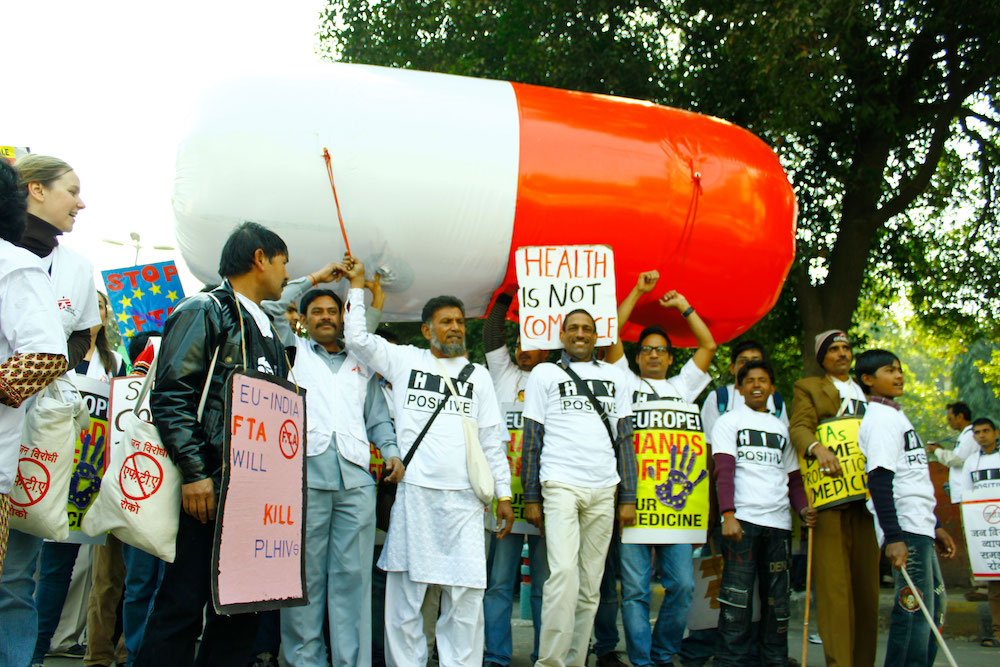
Indian social movements, including fisherfolk and labour unions, people living with HIV/AIDS and other health activists have been mobilizing against the FTA. International actions and campaigns have particularly targeted the proposed intellectual property provisions of the agreement, and the impact of the FTA on access to medicines.

last update: May 2012
Photo: MSF


DNP+ and MSF welcome the removal of harmful IP provisions in EU-India FTA , but call for continued vigilance
Delhi Network of Positive People (DNP+) and Médecins Sans Frontières (MSF) notes positively that the intellectual Property (IP) chapter of this trade deal largely preserves India’s public health safeguards and does not include any harmful provisions that go beyond the World Trade Organization’s TRIPS agreement, such as data exclusivity or patent term extensions.
EU-India FTA text (Feb 2026)
India-EU FTA: What the deal means for digital trade and intellectual property rights
The deal points to creating a secure digital trade environment by promoting paperless transactions and cyber-security .
India-EU FTA: Both sides to adopt ‘most favoured nation tag’ for 5 years – What does this mean?
The two sides plan to grant each other MFN status for five years once the FTA goes into effect.
India, EU release provisional text of FTA with 20 chapters
No exemption from CBAM for India, separate chapter on model mediation procedures, services, review after five years.
The promise of EU-India FTA for Indian patients: A case for price regulation
The EU-India FTA promises cheaper drugs and medical devices, but India's regulatory framework may hinder patient benefits. Current pricing mechanisms, including market-based ceiling prices and loopholes for fixed-dose combinations, prevent cost reductions from reflecting in retail prices. An urgent overhaul of drug pricing and an independent regulator for procedures are needed to ensure affordability and realize the FTA's full potential.
EU-India free trade agreement: Neo-colonialism without colonies
Despite of EU - India FTA rhetoric of partnership, equality, and shared values, the deal reflects a deep power imbalance rooted in a modern form of colonialism—regulatory imperialism. This agreement is not as a true partnership but as a mechanism of neo-colonial control—one that transforms trade into a tool of discipline, not development.
The mother of all deals: why geopolitics finally sealed the EU–India FTA
Its conclusion has been driven in large part by shifting geopolitical pressures from Washington and Beijing, which have forced both Brussels and New Delhi to reassess their strategic positioning.
Public health group demands release and discussion on full text of India-EU FTA
The Working Group points out that the European Commission's press release states the agreement provides for a high level of protection and enforcement of Intellectual Property rights, including copyright, trademarks, designs, trade secrets and plant variety rights.
EU-India trade deal leaves bloc's carbon border tariff intact
A landmark trade deal struck by India and the European Union on Tuesday will not trigger any changes to the bloc's carbon border tariff, EU officials said, despite India's concerns over the scheme.