



Asia & Pacific


Bilateral deal-making involving governments of Asia and the Pacific region.


Protest against APEC by Gerak Lawan in Indonesia
The Indonesian civil society movement coalition, Gerak Lawan, held a protest on 7 October 2013 in front of the Ministry of Finance as a symbol of the struggle against the liberalization agenda in Indonesia.
Bilateral FTAs emerge as Safta talks in limbo
With the implementation of the South Asian Free Trade Agreement (Safta) remaining in limbo, Nepal has been negotiating with a number of South Asian countries to sign bilateral Free Trade Agreements.
US Pacific Island Country trade and development agreement being explored
In July 2013, Pacific Island Country Trade Ministers called on the Pacific Forum Secretariat to give priority to trade and economic cooperation discussions with the United States.
Why 'free trade' hits Pacific people (PMC)
For Gary Juffa -- the Governor of Papua New Guinea's Oro province and one of the region's most outspoken critics of free trade -- neoliberalism is a hard pill to swallow.
Turkey ready to sign FTA with Mexico, says minister
Turkish Minister of Economy Zafer Caglayan said on Tuesday that Turkey was ready to sign a comprehensive Free Trade Agreement with Mexico.
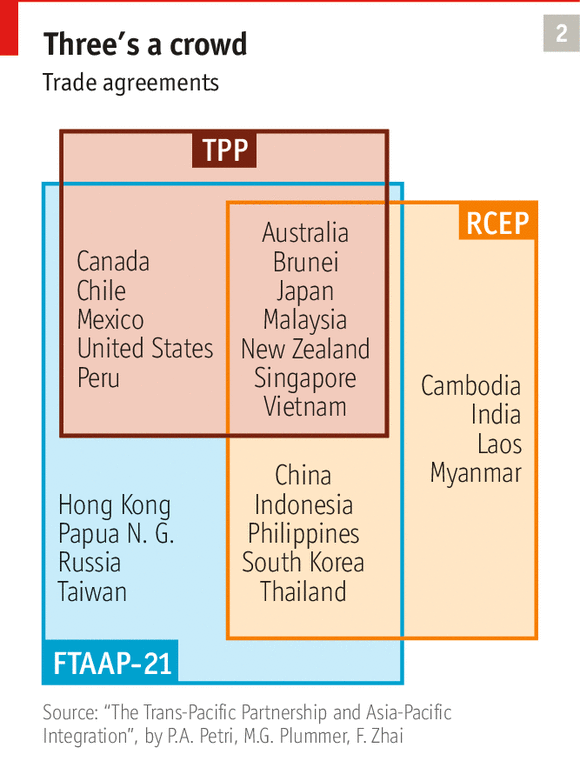
The rush toward Asia-Pacific FTAs
Following the recent launch of free trade negotiations between the United States and the European Union, there are now three mega-trade-and-investment liberalization blocs being shaped in various parts of the world.
Turkey aims to complete talks for FTA with Ukraine
Turkish Foreign Minister Ahmet Davutoglu said Turkey aims to complete the talks for Free Trade Agreement (FTA) with Ukraine as of 2015.
Integration of free trade agreements in East Asia urged
A senior Chinese trade official on Thursday called for the integration of free trade agreements in East Asia, while experts called for an acceleration of domestic reforms geared toward a market-oriented economy to facilitate the establishment of trade pacts.
Regional consolidation, cross-regional tie-ups, or multilateralization of East Asian FTAs?
So far, research on the impacts of free trade agreements in east Asia assume the full utilisation of preferences. This column argues that newer evidence suggests that this assumption is made in error: estimated uptake is particularly low in east Asia. If we assume a more realistic utilisation rate in estimating impacts, results suggest that actual utilisation rates significantly diminish the benefits from preferential liberalisation, but in a non-linear way. In the absence of Doha, the multilateralisation of preferences, even without reciprocity, is the practical route that is most likely to deliver the greatest benefits to WTO members.
Turkey fears being left out in the cold by EU free trade deals
Frustrated with the slow progress of its bid to join the EU, the rash of free trade pacts Brussels is negotiating that leave Turkey out in the cold has Ankara threatening to tear up its customs union agreement.