

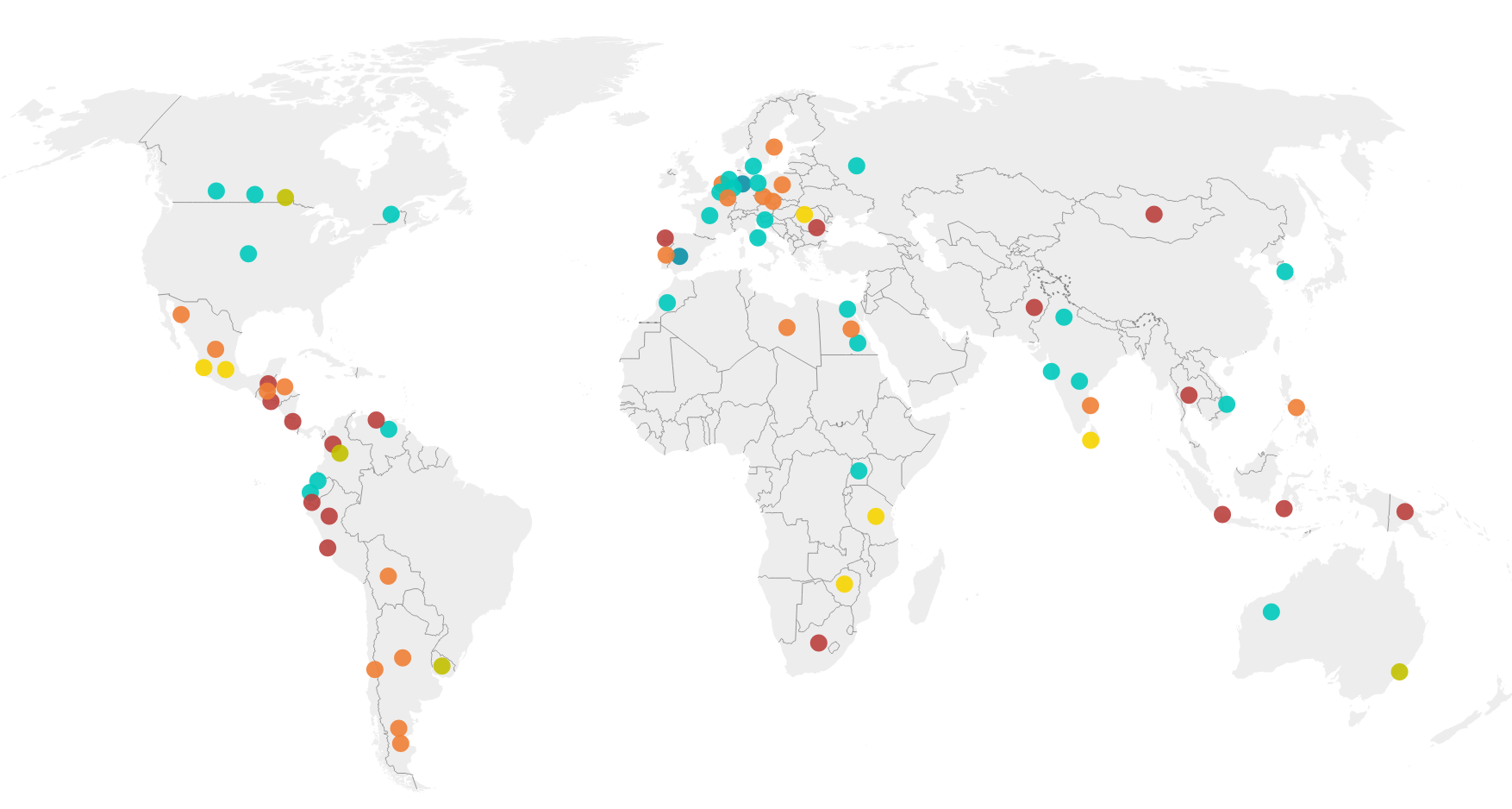
ISDS Case Map

On 7 June 2008, Canada concluded free trade agreement (FTA) negotiations with Colombia. The Canadian government has pushed this agreement, stating that “Colombia is an established and growing market for Canadian exporters (e.g. wheat, pulses, barley, chemicals, paper products, and heavy equipment) and service providers (mining, oil and gas, engineering, information, and communication sectors), as well as a strategic destination for Canadian direct investments (mining, oil exploration, printing, and education).“
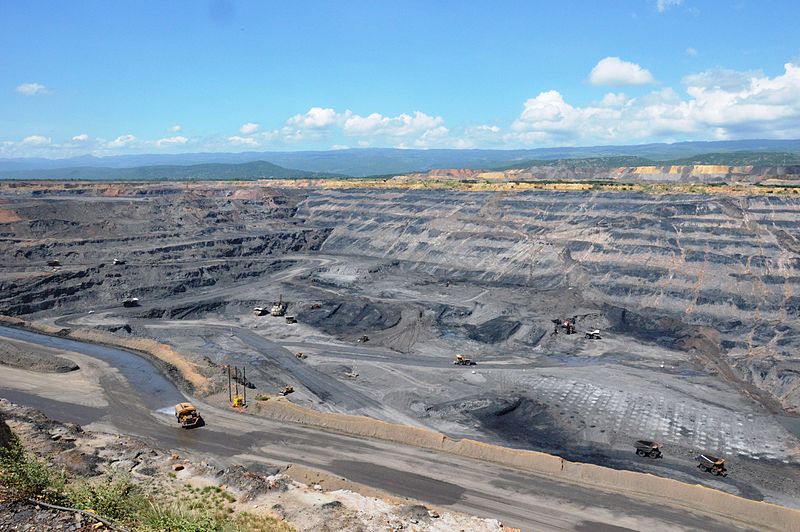
Canada has also said that the FTA will “promote a more stable and predictable investment environment in Colombia.“ Many Colombians and Canadians think otherwise, and believe that the investment and economic ramifications of the FTA will lead to more instability and increased human rights violations in a country already plagued with violence and conflict. Canadian mining interests, for example, will benefit greatly from equal treatment in the exploitation of Colombian natural resources. But in a country where trade unionists and labor activists are routinely threatened and murdered, many say that the involvement of Canadian business interests will only increase illegal persecution of those who struggle for fair working conditions and other labour-related causes. Mineral exploitation, such as that being developed in the town of Marmato by Canadian Colombia Goldfields, threatens the displacement of whole communities in order to facilitate mining, in a country already estimated to have between 1.8 and 3 million internally displaced people.
Canada-Colombia trade relations are nominal in comparison to other countries, barely surpassing $1 billion in trade each year. However, in terms of sectors engaged in megaprojects, such as mining or oil and gas, Canadian multinationals are among the major players.
Regarding Canada’s promotion of this FTA, Michael Hart, a professor at Carleton University in Ottawa says, “It’s a political gesture