

US-DR-CAFTA


The US-Central America Free Trade Agreement, commonly referred to as “CAFTA,” was signed in December 2003 after twelve short months of negotiation. The negotiations involved the US, Costa Rica, El Salvador, Guatemala, Honduras and Nicaragua. Costa Rica at first refused to join the agreement, then changed its position in late January 2004. The US separately negotiated a bilateral treaty with the Dominican Republic, with a view to folding the deal, and the country itself, into the US-CAFTA scheme.

The US-CAFTA was signed late May 2004, and the Dominican Republic became an additional party to it in August 2004. Since then, the accord has been officially renamed the “United States-Dominican Republic-Central America Free Trade Agreement” or US-DR-CAFTA. But the overall agreement -- which a lot of people continue calling just “CAFTA” -- still needs ratification by all parties to go into force.

CAFTA is a wide-ranging agreement covering many areas: agriculture, telecommunications, investment, trade in services (from water distribution to gambling), intellectual property, the environment, etc. It essentially serves US business interests by giving them a concrete and high-level set of rights to operate in Central America. Some US sectors, such as sugar producers, feel threatened by the treaty. But by and large, the threats are mainly against the Central American countries which signed on, as it opens the depths of their economies -- public and private -- to the interests and power of US companies.

In July 2005, US Congress approved the DR-CAFTA and Bush signed it into law in early August. The Central American parliaments eventually also approved it. For the Dominican Republic, the treaty took effect in 2006.

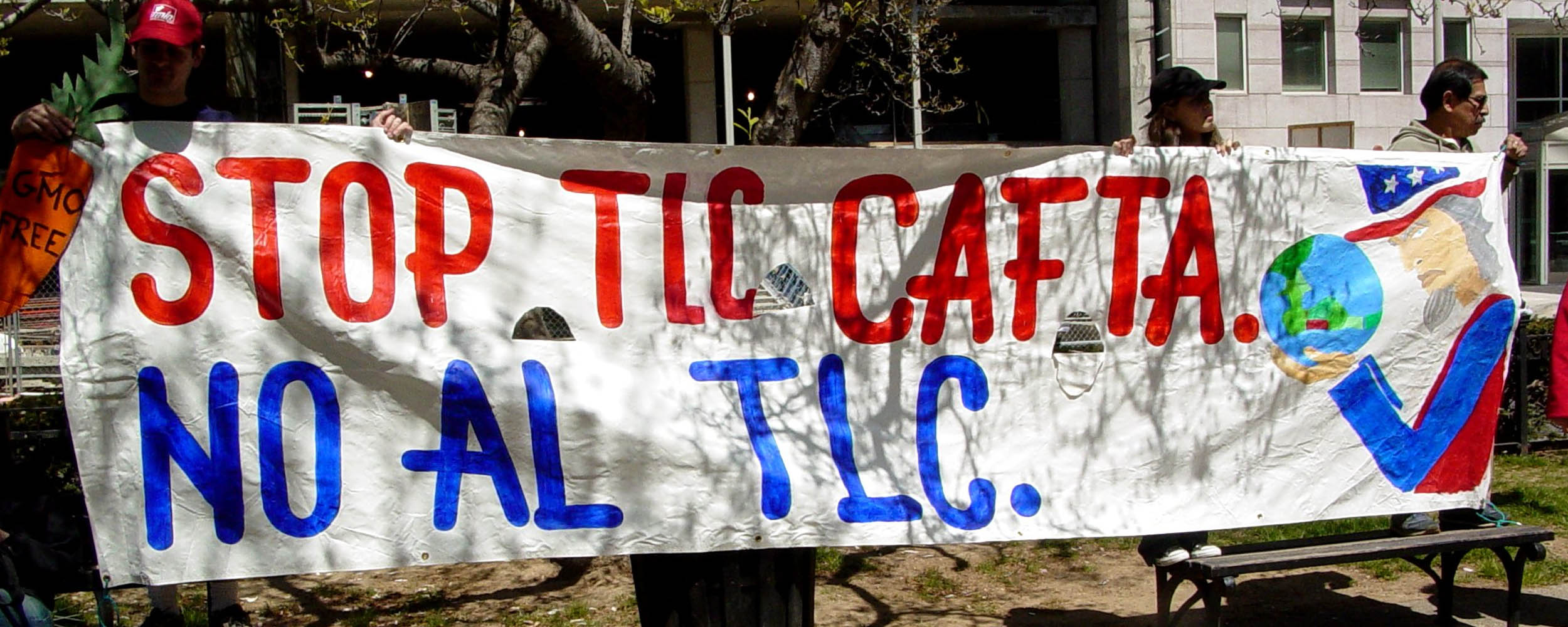
Costa Rica was the Central American country with the strongest resistance to DR-CAFTA. There were large public demonstrations and information campaigns, and a broad grouping of civil society organizations, from trade unions to small farm organizations, signed on. This coalition successfully pushed for a referendum on ratification, which was held on 7 October 2007. The result: 51.62% in favour and 48.38% opposed. The result was considered binding since more than 40% of the electorate voted. In view of these results, CAFTA was ratified.

On December 23, President Bush issued a proclamation to implement the DR-CAFTA for Costa Rica as of 1 January 2009.

last update: May 2012
Photo: Public Citizen


Guatemala off the hook in CAFTA labor case
The U.S., for the most part, lost its first challenge of another country’s adherence to the labor rules under a trade deal.
El Salvador freezes OceanaGold bank accounts, assets over $8 mln payment
El Salvador froze bank accounts and assets belonging to OceanaGold Corp after the mining company refused to pay the country $8 million as mandated by an international court.
Guatemala agrees to early poultry tariff elimination
Guatemala has agreed to eliminate its 12.5 percent tariff on U.S. fresh, frozen and chilled poultry products under the U.S.-DR-CAFTA free trade agreement
Latin American nations set import records for U.S. corn
The U.S. Grains Council recently announced new grain import records set by Guatemala, El Salvador, Honduras and Nicaragua.
Agro, agribusiness, free trade pact’s big winners
The agro and agribusiness sectors have profited the most from the US-Central America-Dominican Republic Free Trade Agreement (DR-CAFTA) during the 10 years since it took effect.
The impact of CAFTA: drugs, gangs, and immigration
It’s clear that the free-trade panacea promised by policymakers, especially its most enthusiastic cheerleaders has not come to pass.
Report: US trade and migration policies feed crisis in Honduras
Failed trade and migration policies of the United States have exacerbated political problems in Honduras, leading to greater poverty and violence, says a recent report by the AFL-CIO.
What “free trade” has done to Central America
Ten years after the approval of DR-CAFTA, we are seeing many of the effects that citizens who opposed the deal cautioned about., write Manuel Perez-Rocha and Julia Paley.
Guatemala sets up a commission to defend the US claim
The Government of Guatemala set up an inter-agency commission to support its dispute settlement process. The Commission will support Guatemala’s defence in the labour proceedings initiated by the United States.
Guatemala and the United States commence arbitration
45 days after putting into motion an arbitral panel for violation of labour rights, the Office of US Trade Representative (USTR) will today present the basis for its claims against Guatemala under CAFTA-DR.

Referenced sites

De pie, Costa Rica de pie!!!

Publicación del Partido Frente Amplio para informar sobre la resistencia al TLC en Costa Rica

DR-CAFTA Tratado de Libre Comercio de las Américas

Temas relevantes acerca del tratado de libre comercio, República Dominicana, Centroamérica y Estados Unidos.

Sin pelos en la lengua: NO al TLC

Espacio alternativo a los medios de (des)información tradicionales que dice las verdades sobre el TLC sin pelos en la lengua

US-CAFTA-DR website

By the US government