


US-DR-CAFTA


The US-Central America Free Trade Agreement, commonly referred to as “CAFTA,” was signed in December 2003 after twelve short months of negotiation. The negotiations involved the US, Costa Rica, El Salvador, Guatemala, Honduras and Nicaragua. Costa Rica at first refused to join the agreement, then changed its position in late January 2004. The US separately negotiated a bilateral treaty with the Dominican Republic, with a view to folding the deal, and the country itself, into the US-CAFTA scheme.

The US-CAFTA was signed late May 2004, and the Dominican Republic became an additional party to it in August 2004. Since then, the accord has been officially renamed the “United States-Dominican Republic-Central America Free Trade Agreement” or US-DR-CAFTA. But the overall agreement -- which a lot of people continue calling just “CAFTA” -- still needs ratification by all parties to go into force.

CAFTA is a wide-ranging agreement covering many areas: agriculture, telecommunications, investment, trade in services (from water distribution to gambling), intellectual property, the environment, etc. It essentially serves US business interests by giving them a concrete and high-level set of rights to operate in Central America. Some US sectors, such as sugar producers, feel threatened by the treaty. But by and large, the threats are mainly against the Central American countries which signed on, as it opens the depths of their economies -- public and private -- to the interests and power of US companies.

In July 2005, US Congress approved the DR-CAFTA and Bush signed it into law in early August. The Central American parliaments eventually also approved it. For the Dominican Republic, the treaty took effect in 2006.

Costa Rica was the Central American country with the strongest resistance to DR-CAFTA. There were large public demonstrations and information campaigns, and a broad grouping of civil society organizations, from trade unions to small farm organizations, signed on. This coalition successfully pushed for a referendum on ratification, which was held on 7 October 2007. The result: 51.62% in favour and 48.38% opposed. The result was considered binding since more than 40% of the electorate voted. In view of these results, CAFTA was ratified.

On December 23, President Bush issued a proclamation to implement the DR-CAFTA for Costa Rica as of 1 January 2009.

last update: May 2012
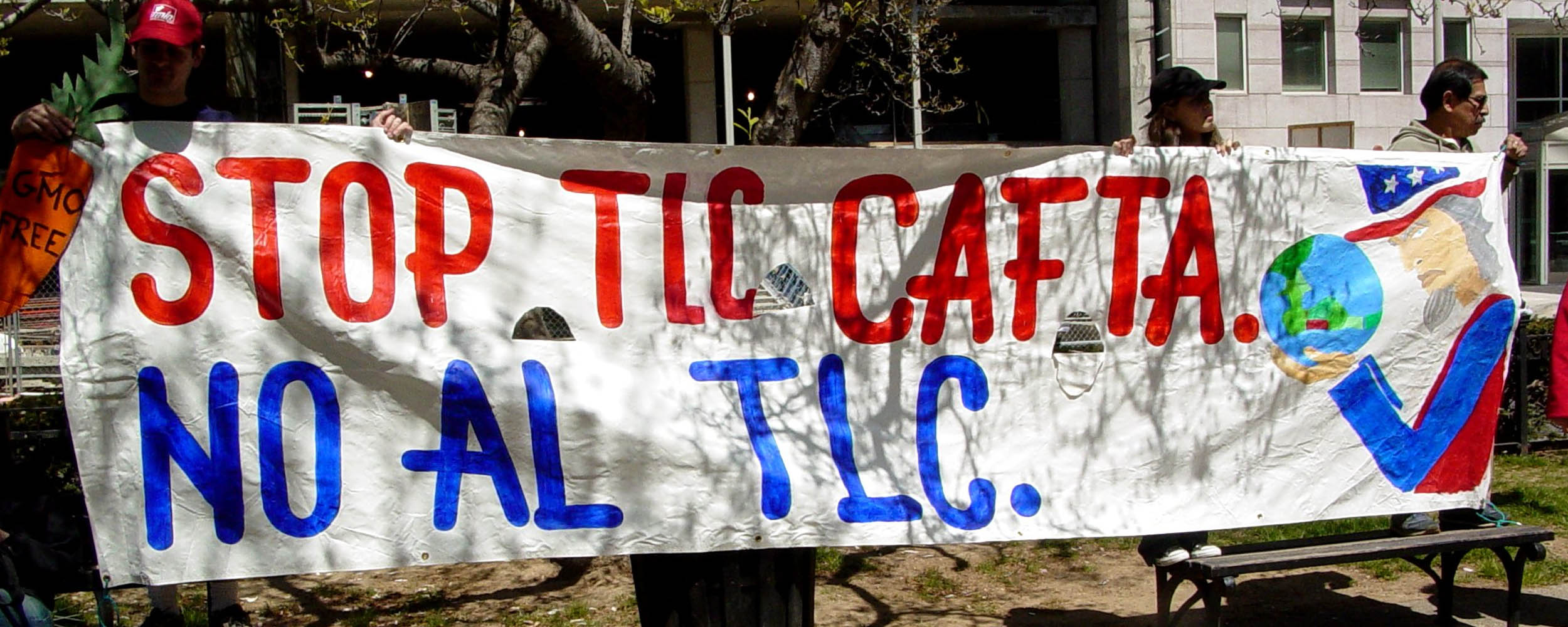
Photo: Public Citizen


DR should emulate neighbors, be more aggressive with FTA
Officials at the highest level along with private business persons from El Salvador are currently on tours that have been denominated as “CAFTA-Tours” throughout the United States, looking to attract investments, in addition to participating in work shops to train exporters on how to best benefit from markets to open with DR-CAFTA.
Farmers reject new taxes, ask for assistance with upcoming FTA
Associations in the Dominican farming sector today rejected some of the measures recommended by the International Monetary Fund (IMF) and requested from the government to establish a program to shore the sector up, prior to implementing the Free Trade Agreement (FTA) with the United States.
Trade liberalization challenges post-CAFTA
This CRS report for US Congress analyses some of the challenges that became apparent in the aftermath of a divisive trade debate and how they could affect consideration of future trade agreements.
US sets deadline for entering Free Trade
The Dominican Republic has until 15 November to approve reforms stipulated by the Free Trade Agreement with the United States and Central America (CAFTA-DR), or it will not be able to participate as of January 2006, the launch date for the accord.
Costa Ricans march against US free trade agreement
Costa Rica University students peacefully marched to the National Assembly on Tuesday, expressing their rejection of the signing of a Free Trade Agreement with the United States.
American Chamber warns of urgent measures prior to Free Trade
The American Chamber of Commerce yesterday submitted to both chambers of Congress a number of administrative and legislative measures that the country should adopt, within the framework of the Free Trade Agreement with the United States and Central America (DR-CAFTA), while warning that all imported products must be treated with the same guidelines as local goods.
Top US executives set for FTA tour of Central America
Taking advantage of a newly approved free trade agreement, the US begins a commercial offensive in Central America this coming week, prompting concerns that local economies weakened by recent floods could represent easy targets for US corporations.
Nicaragua approves Central American Free Trade Agreement
Nicaragua's legislature late Monday approved the Central American Free Trade with the United States.
Dominican Republic passes free-trade agreement with US
Dominican legislators overwhelmingly approved a free-trade agreement yesterday with the United States and five Central American countries - rejecting arguments that the pact would devastate the domestic sugar industry.
In the trade zone: Georgians assess effects of CAFTA deal
Georgia's poultry industry is gearing up to ship more frozen chicken abroad under the Central American Free Trade Agreement, while parts of the state's textile industry also stand to gain.

Referenced sites

De pie, Costa Rica de pie!!!

Publicación del Partido Frente Amplio para informar sobre la resistencia al TLC en Costa Rica

DR-CAFTA Tratado de Libre Comercio de las Américas

Temas relevantes acerca del tratado de libre comercio, República Dominicana, Centroamérica y Estados Unidos.

Sin pelos en la lengua: NO al TLC

Espacio alternativo a los medios de (des)información tradicionales que dice las verdades sobre el TLC sin pelos en la lengua

US-CAFTA-DR website

By the US government