



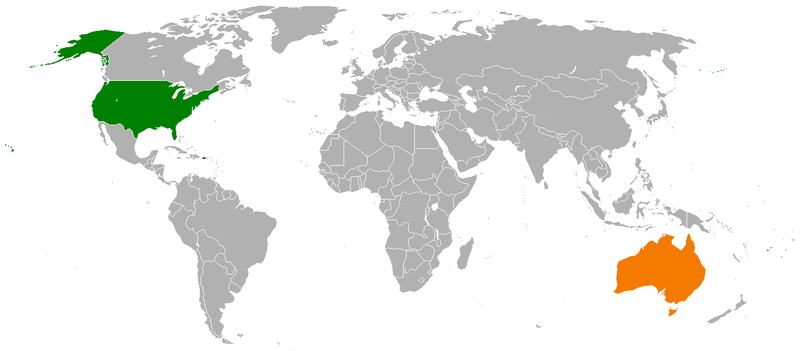
US-Australia


The US-Australia Free Trade Agreement (or AUSFTA) was signed on 18 May 2004 and came into effect on 1 January 2005. It's a comprehensive agreement, with chapters on: Market access for goods, agriculture, pharmaceuticals, cross-border services, financial services, electronic commerce, investment, intellectual property rights, government procurement, competition policy, labour, environment and dispute settlement.

Throughout the negotiations, the contents of the agreement were problematic for different sectors on both sides of the Pacific. US farmers managed to keep sugar out of the deal, but would face new competition from Australian dairy imports. Social opposition to the agreement ran high in Australia, the major concern being access to affordable medicine. The FTA commits Australia to provide stronger patent monopolies to US drug companies, directly compromising Australia's Pharmaceuticals Benefits Scheme (PBS).

The FTA became a key electoral issue in Australia in late 2004. However, Prime Minister Howard was re-elected and came to a final accord with the Bush administration on the drugs chapter by the end of the year, thereby assuring the agreement’s entry into force at the start of 2005.

One year into the FTA, debate broke out in Australia over the impacts. In the first year, US exports to Australia had shot up while Australia's exports to the US had shot down. Further, US drug companies were not happy with the limited safeguards left to protect Australia's PBS and started moving to have them scrapped.

In 2007, Australia registered a $13.6 billion trade deficit with the US, its largest ever with any trading partner. The National Institute of Economic and Industry Research estimates that the US-Australia FTA could cost the Australian economy up to $50 billion and 200,000 jobs.

last update: May 2012

Photo: Jackaranga / Wikipedia / Public domain


Software groups warn of FTA dangers
The US-Australia Free Trade Agreement poses a grave threat to the entire Australian software development industry due to the legal framework on intellectual property which is required upon adoption of the pact, the Open Source Industry Association and Linux Australia have warned.
US-Australia FTA: Furniture makers fear they may take a big hit
The US free trade agreement is getting a mixed response from manufacturers, writes Ian Porter. The prospect of Australian manufacturing going toe to toe with the giant American industrial base might sound like an abject mismatch.
Free trade agreement not all good news
Australia's free-trade agreement with the United States was on a rollercoaster to somewhere all this week and the most seasoned observers hadn't a clue where the thing would end up.
Drug spat stalls Australia-US free trade deal
A long-awaited Australia-US free trade agreement (FTA) hit a new snag in Canberra, just hours after US President George W. Bush reaffirmed Washington's commitment to a pact he called "a milestone in the history of our alliance".
What's the big deal?
John Garnaut cuts through the politics of the free trade agreement with the United States to find the winners and losers.
URGENT: Stay GE-Free: Reject the US-Australia FTA
If Howard and Bush's so-called 'free trade' deal is confirmed by the Australian parliament and senate (WHICH CAN ONLY HAPPEN IF THE ALP VOTES WITH THE GOVERNMENT), genetically engineered crops and foods will be forced down our throats and onto our farms, and our hopes for GE-free Australia will end!!
FTA 'first step to destroying PBS'
The Medical Journal of Australia, published by the Australian Medical Association, this week carries two articles claiming the free trade agreement (FTA) will undermine the Pharmaceutical Benefits Scheme (PBS).
Tridge fears FTA patent war
One of Australia's most recognised Linux developers, Dr Andrew Tridgell, has attacked the proposed Australia-US Free Trade Agreement (FTA), claiming it could pit local open source developers against Microsoft in a "patent war".
Australian Senate urged to block the FTA
Leading unions, doctors and welfare groups are urging the Senate to block the free trade agreement with the United States.
Why Latham should reject the FTA
This so-called free trade agreement is a humiliating sell-out, says Tim Colebatch.

Referenced sites

Citizens Trade Campaign > US-Australia FTA

CTC's web page on the US-Australia FTA

The US-Australia FTA and the Pharmaceutical Benefits Scheme

A submission to the Australian Senate Select Committee on the US-Australia Free Trade Agreement by Prof Peter Drahos, Dr Thomas Faunce, Martyn Goddard and Pr...

