

Sri Lanka has preferential and free trade agreements with India, Pakistan, Iran, Egypt, Singapore and Israel. It is currently in the processing of upgrading its agreement with India to a much more comprehensive one.
Sri Lanka is also party to SAFTA, the agreement on a South Asia Free Trade Area, as well as BIMSTEC, which aims to hammer out a regional FTA.
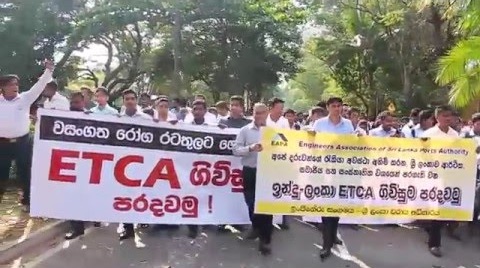
last update: May 2012 Photo: Sri Lankan engineers' association
Talks between China and Sri Lanka on a Free Trade Agreement have stalled following disagreements on certain issues, including on the level of liberalization.
Prime Minister and Finance Minister Srettha Thavisin is set to visit Sri Lanka to sign a free-trade agreement, marking Thailand's 15th FTA and the first under Mr. Srettha's premiership since August last year.
Sri Lanka and Thailand are set to sign a Free Trade Agreement (FTA) on February 3rd, a strategic play expected to bolster bilateral trade to over US$ 1.5 billion. The signing ceremony will witness the presence of Thailand’s Prime Minister, Srettha Thavisin, on his visit to Sri Lanka.
Sri Lanka has started discussions on separate agreements on investment and trade with India and an attempt to join the Regional Comprehensive Economic Partnership has been hit by a lack of rules to admit new members.
Sri Lanka is looking beyond strengthening ties with its largest traditional export destinations, the USA and the EU/UK, to deeper integration with South Asia, South East Asia and East Asia nations.
Sri Lanka will sign a Free Trade Agreement (FTA) with Malaysia when President Ranil Wickremesinghe visits the country in February, said visiting Malaysian Minister of Foreign Affairs, Dr Zambry Abd Kadir.
Sri Lanka’s President and his South Korean counterpart discussed the importance of finalizing a trade agreement between Sri Lanka and South Korea, and enhancing investment relations between the two nations.
Thailand and Sri Lanka expect to sign a free trade agreement (FTA) in 2024 as the two parties aim for three more rounds of talks this year to conclude the negotiations.
Sri Lanka is seriously moving with a new laws which will prevent any of its future governments from backtracking bilateral and multilateral deals signed without the consent of the relevant parties involved