

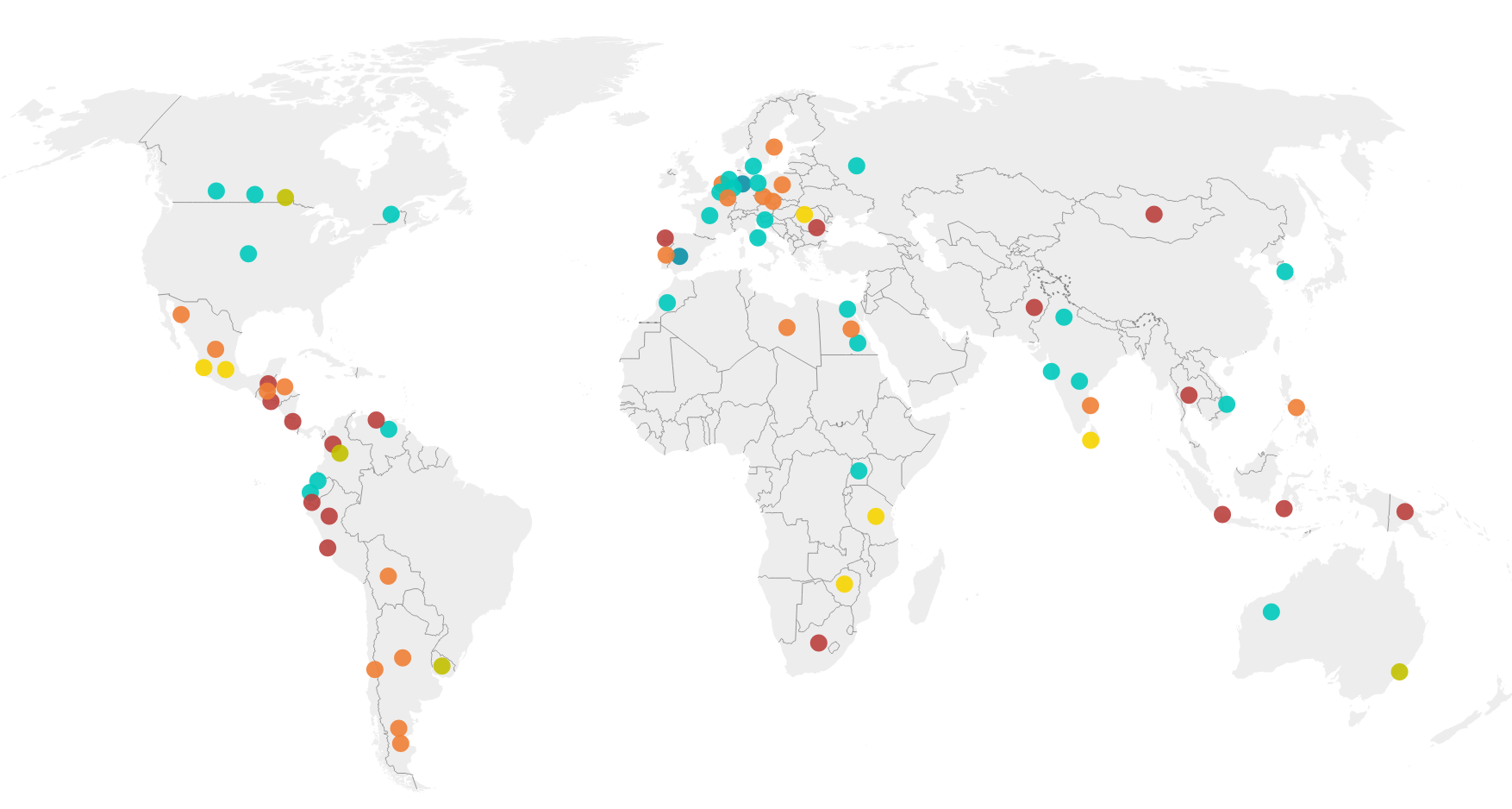

Sri Lanka has preferential and free trade agreements with India, Pakistan, Iran, Egypt, Singapore and Israel. It is currently in the processing of upgrading its agreement with India to a much more comprehensive one.
Sri Lanka is also party to SAFTA, the agreement on a South Asia Free Trade Area, as well as BIMSTEC, which aims to hammer out a regional FTA.
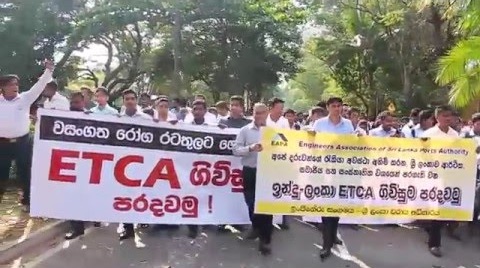
last update: May 2012 Photo: Sri Lankan engineers' association
The June coup d'état in Honduras was a body blow to political integration in Central America. The old idea of a protected and privileged trade area does not make any sense now in the light of globalisation, "so the concept of open integration was adopted. But that needed to be translated into concrete terms and this was not done."
The Free Trade Agreement between Sri Lanka and Pakistan will be further expanded to services and investment in keeping with a bilateral discussions between President Mahinda Rajapaksa and Pakistan Prime Minister Syed Yusuf Raza Gilani, yesterday.
Sri Lanka and Kuwait successfully concluded negotiations on the proposed Bilateral Investment Promotion and Protection Agreement (IPPA) between two countries. This will be Sri Lanka’s first ever IPPA with a Gulf country.
The Department of Commerce said this week that under the Sri Lanka-Pakistan Free Trade Agreement (FTA), Pakistan has confirmed duty free status to 4,500 Sri Lankan products.
The President of the Sri Lanka Nepal Business Council of the Federation of Chambers of Commerce and Industry of Sri Lanka said that Nepal had approached Sri Lanka about entering into a free trade agreement.
The President of the Sri Lanka Nepal Business Council of the Federation of Chambers of Commerce and Industry of Sri Lanka (FCCISL) said that Nepal had approached Sri Lanka about entering into a free trade agreement.
Inadequate regulatory and monitoring measures, say local businesses, allowed corruption into the Indo-Lanka FTA implementation and allowed unscrupulous investors to violate local laws and benefit from the FTA.
This article is written in recognizing the numerous opinions floating around in Sri Lanka in respect of the proposed Comprehensive Economic Partnership Agreement (CEPA) with India. Most of the public discussions and paper articles on CEPA, which we see today, are either based on personal or political sentiments or absolute analysis of numerical figures. The whole purpose of this article is to give a holistic and comparative analysis based on facts and figures explaining the current status of the FTA with India.
Sparks flew in the Sri Lankan parliament as supporters and critics clashed over the proposed Comprehensive Economic Partnership Agreement (CEPA) with India.