


JPEPA


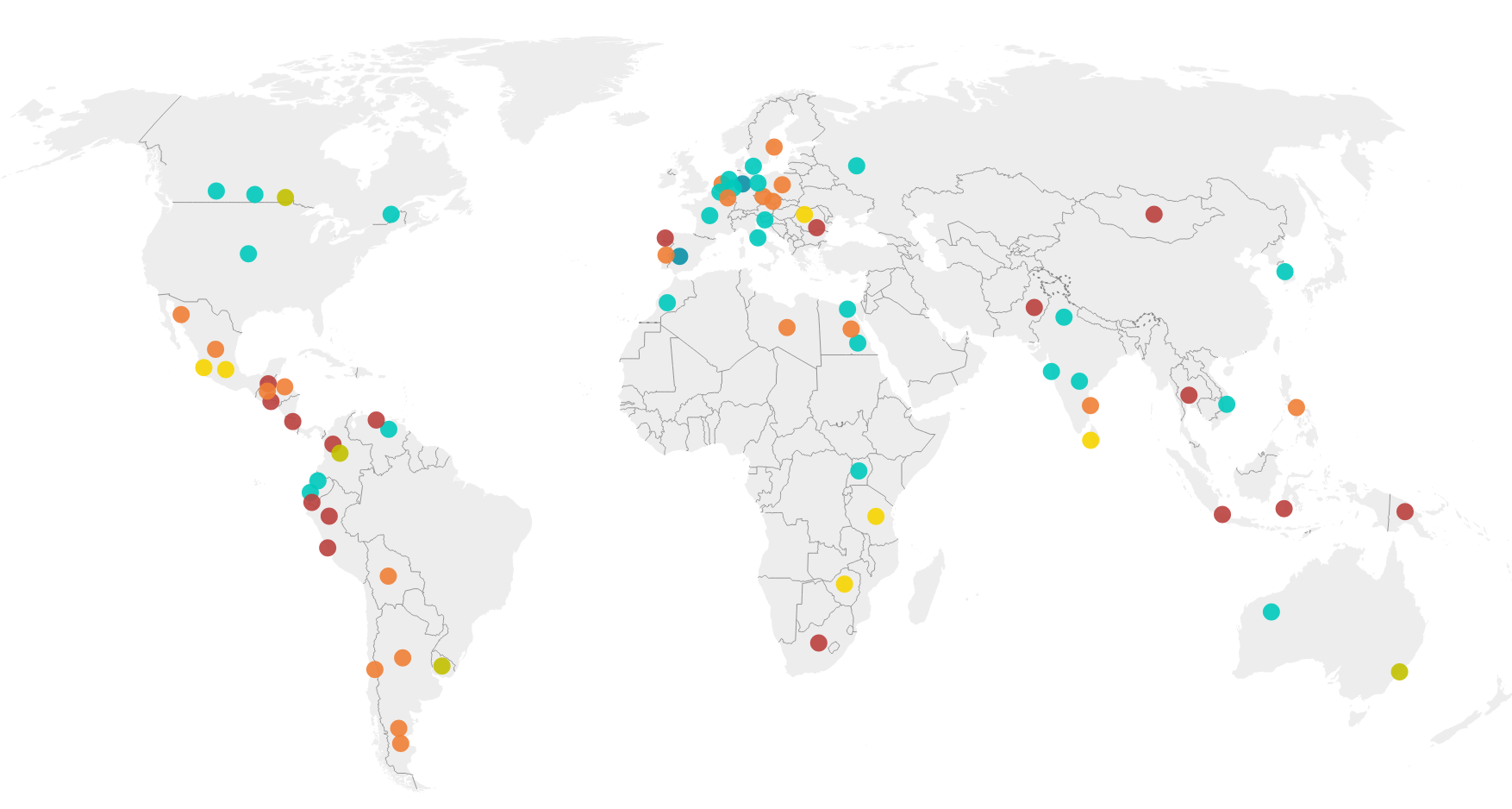
The governments of Japan and the Philippines reached a basic political agreement on the Japan-Philippines Economic Partnership Agreement (JPEPA) on 29 November 2004 at the ASEAN Summit in Laos. The agreement was then signed in Helsinki on 9 September 2006 and came into force on 11 December 2008. It was the Philippines' first free trade agreement and Japan's fourth.

JPEPA was and remains hugely controversial. Filipinos -- and on some issues, Japanese groups -- mobilised to stop the deal for many reasons, including the following:

- the small job market openings for Filipino healthcare workers are very limited (the workers must learn Japanese, undergo equivalency exams, stay for only a restricted time etc) and overlook the real potential for abuse of Filipino workers in Japan;
- concerns that Japan will gain access to and be able to overfish Philippine waters, ruining the livelihoods of small fisherfolk;
- any supposed benefits for increased pineapple and banana exports to Japan would in fact go to corporations like Dole and Del Monte, and their local business partners, who own and run the plantations in the Philippines -- not to small or landless Filipino farmers;
- its unconstitutionality, since JPEPA allows Japanese corporations to own land, operate schools and practice certain professions in the Philippines which the Philippine Constitution does not allow;
- the huge imbalances in the deal, e.g. Japan excluded almost 200 tariff lines from the agreement, the Philippines only six; and
- the fact that JPEPA gives explicit legal ground for Japan to dump toxic wastes in the Philippines.

last update: May 2012
Photo: Karasantos / CC BY-NC-SA 2.0


Senate ‘okays' JPEPA but sets stiff conditions
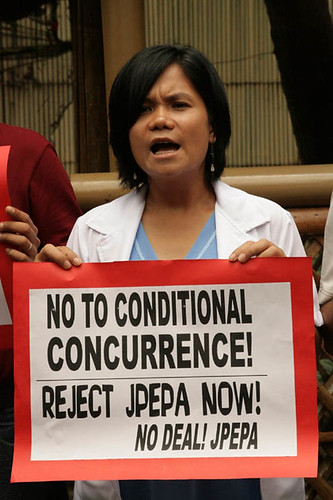
Saying her committee had done a “technical makeover” of the proposed treaty, Sen. Miriam Defensor-Santiago Monday formally recommended that the Senate give its “conditional concurrence” to the Japan-Philippines Economic Partnership Agreement (JPEPA).
Santiago, Roxas seek conditions on JPEPA
Senators Miriam Defensor-Santiago and Manuel Roxas II on Monday endorsed the approval of the controversial Japan-Philippines Economic Partnership Agreement (JPEPA) -- but only on certain conditions.
'Unity swim' staged vs JPEPA
Protest rallies are common these days in the Philippines, but on Monday, militants staged a different kind of protest as they engaged in a "unity swim" at Manila Bay against the passage of the controversial trade agreement between the Philippines and Japan.
Filipino fishers JPEPA's biggest losers, says leftwing group
If approved, an estimated 200,000 metric tons of tuna would be fished annually by the Japanese in Philippine waters under the agreement. This would amount to $970 million annual loses for the Philippine fisher folk sector.
Arroyo can't pressure Senate on JPEPA--Senator Pia Cayetano
Philippine President Gloria Macapagal-Arroyo should not be pressuring the Senate to ratify the controversial Japan-Philippines Economic Partnership Agreement (JPEPA), Senator Pia Cayetano said Wednesday. "Anyone attending the hearings on JPEPA would have concluded that this agreement has so many loopholes and that the government panel miserably failed to secure terms favorable to Filipinos."
Eight reasons to reject the JPEPA
The Japan-Philippines Economic Partnership Agreement (JPEPA) can be best described in three words: unequal, defeatist and destructive. Recent government propaganda, however, has been trying to depict the JPEPA as an indispensable agreement-- even as the country is currently reeling from a food crisis brought about by the same neoliberal framework that JPEPA was designed from. A statement from IBON.
Jpepa ratification to worsen food crisis
The current rice crisis facing the country should convince the Senate not to ratify the Japan-Philippines Economic Partnership Agreement because the deal threatens to aggravate the country's food insecurity, the NO DEAL! coalition said today.
Gov't eyes April okay for JPEPA
Philippine Trade Secretary Peter B. Favila wants the Japan-Philippines Economic Partnership Agreement ratified by the Senate before the end of April.
NGO hits Roxas, Santiago for endorsing JPEPA
A Mindanao-based coalition of non-government organizations has criticized senators Manuel Roxas II and Miriam Defensor-Santiago for recommending the ratification of the Japan-Philippines Economic Partnership Agreement (JPEPA).
Speak out: Trade deals
We should use what we learned from the ZTE deal to analyze JPEPA. We should demand accountability and transparency in all the deals and contracts that our government enters into.