


The governments of Japan and India started negotiating a comprehensive Economic Partnership Agreement in January 2007. They concluded the deal in 2011.
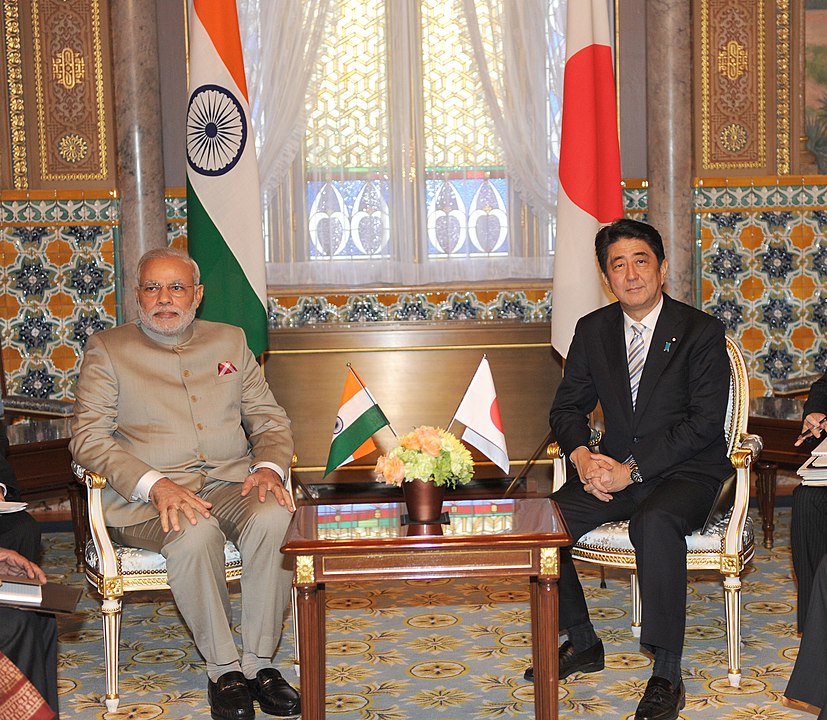
last update: May 2012 Photo: Government of India, licensed under the Government Open Data License - India (GODL)
The proposed India-Japan Comprehensive Economic Partnership Agreement (CEPA), involving trade in goods, services and investments, is unlikely to be signed this year.
Prospects of Japan and India reaching a free-trade deal in time for a leaders' summit this month have weakened, with a number of areas in dispute, a Japanese negotiator said on Thursday.
A number of issues in the proposed India-Japan comprehensive economic partnership agreement (CEPA) are yet to be resolved, but efforts will be made to sort them out so that an announcement on the signing of the agreement could be made during Prime Minister Manmohan Singh's visit to Japan later this month.
Despite India's hope of concluding the Indo-Japan free trade agreement (FTA) in the next round of talks in New Delhi in September this year, there still remains a whole gamut of unresolved issues concerning market access for Indian exports to Japan.
Shri Kamal Nath, India's Minister of Commerce and Industry has expressed hope that the India-Japan Comprehensive Economic Partnership Agreement (CEPA) could be concluded during the next round of talks which are scheduled to be held in New Delhi in September 2008.
The Daiichi Sankyo-Ranbaxy Laboratories deal has come as a shot in the arm for India's Comprehensive Economic Co-operation Agreement (CECA) negotiations with Japan. Indian pharma companies have been unable to break into Japan, the world's second largest drug market, due to the country's stringent sanitary and phytosanitary standards, technical barriers to trade (TBT) and environmental norms.
India and Japan on Wednesday decided to advance the conclusion of a bilateral Free Trade Agreement (FTA) by mid 2008, six months ahead of previous target.
India is prime "real estate" for Japan, both in economic and defense terms. Most importantly, India is a large consumer market with the potential to increase profits for Japanese corporations.
Prime Minister Shinzo Abe called Wednesday for the rapid completion of a free-trade agreement with India and pledged to help finance a $90 billion freight corridor to spur a doubling of investment in the South Asian nation.