


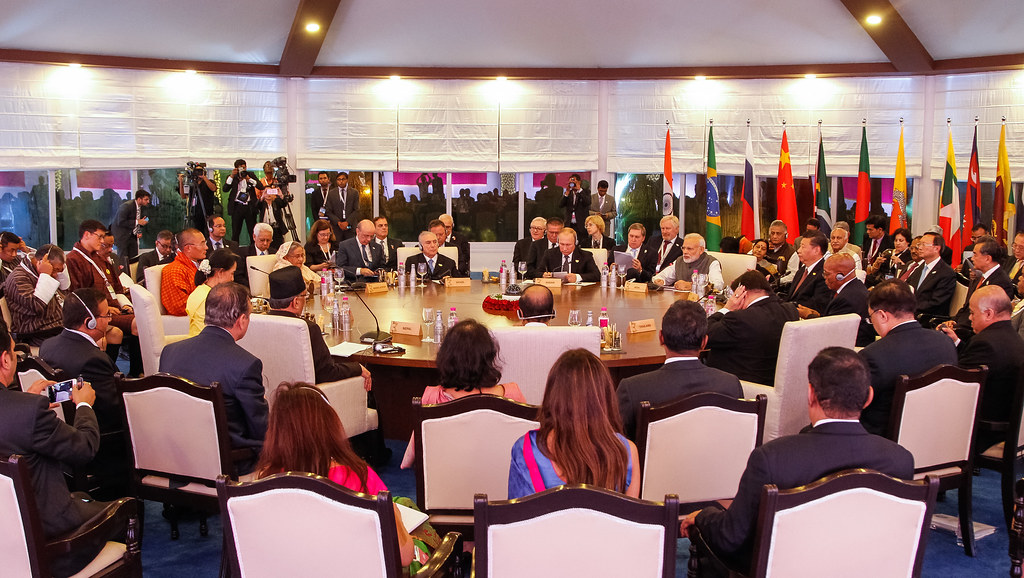
The Bay of Bengal Initiative for Multi-Sectoral Technical and Economic Cooperation, or BIMSTEC, groups together Bangladesh, Bhutan, Burma, India, Nepal, Sri Lanka and Thailand. The seven-country forum aims to achieve its own free trade area by 2017.
last update: May 2012 Photo: Palácio do Planalto/CC BY-NC-SA 2.0
The Bimstec member nations include Bangladesh, India, Myanmar, Sri Lanka, Thailand, Bhutan and Nepal. The summit is scheduled to be held in Kathmandu on August 30-31, 2018.
The seven-nation bloc BIMSTEC today called for specific steps and greater political commitment to conclude negotiations expeditiously for a free trade agreement.
The 18th session of Bay of Bengal Initiative for Multi-Sectoral Technical and Economic Cooperation (BIMSTEC) Senior Officials’ meeting has underlined the need of early finalisation of BIMSTEC free trade area agreement.
Difference between India and Thailand over market access is one of the main reasons why the FTA under BIMSTEC remained stalled during last couple of years.
India should work closely with BIMSTEC, a seven-nation grouping, to conclude trade negotiations and attempt early operationalising of the Bay of Bengal free trade agreement to give a big push to trade in the region, industry body Assocham said.
Softening its earlier stand, India has decided to conclude a low-ambition free trade agreement with the seven-nation grouping Bay of Bengal Initiative for Multi-Sectoral Technical and Economic Cooperation, or Bimstec.
Members of the Trade Negotiating Committee of the Bay of Bengal Initiative for Multi-Sectoral Technical and Economic Cooperation (BIMSTEC), a regional bloc of Bangladesh, Bhutan, India, Myanmar, Nepal, Sri Lanka, and Thailand, are going to meet in Bangkok between 7-9, September 2015, for working on a functional Free Trade Agreement (FTA) among member countries.
Bangladesh hopes that the much-expected BIMSTEC FTA (between Bangladesh, Bhutan, India, Myanmar, Nepal, Sri Lanka, Thailand) will be finalised this year.
Bay of Bengal Initiative for Multi-Sectoral Technical and Economic Cooperation’s lack of concrete achievement points to the need for greater political will and clarity of purpose