

Bangladesh


While Bangladesh may not appear to be a major player on the bilateral FTA front, it is currently under many pressures and involved in various discussions:

- The government was dealt harsh arrangements from the EU in the two parties’ trade and development cooperation agreement of 2001, through which Dhaka accepted WTO-plus demands [from the EU->405], for instance to allow corporate monopoly rights over seeds (patenting);
- The government was in controversial talks with the US over a Trade and Investment Framework Agreement, a preliminary to a possible FTA with Washington; but decided not to sign one in 2010 after several years of discussions. The US subsequently asked Bangladesh to sign a Trade and Economic Cooperation Forum deal, but this has not yet been signed;
- India has been pushing for a bilateral FTA with Bangladesh, but the World Bank has made clear that India would benefit more;
- Pakistan has been pushing for an FTA with Bangladesh as well;
- Bangladesh, for its part, is interested in developing an FTA with China.

Apart from all these, the government is either negotiating or considering negotiating FTAs with Iran, Turkey, Bhutan, Malaysia, Morocco and Sri Lanka.

On a regional level, Bangladesh is a member of SAARC, which has its own FTA, as well as BIMSTEC, which also aims to develop one.

last update: May 2012
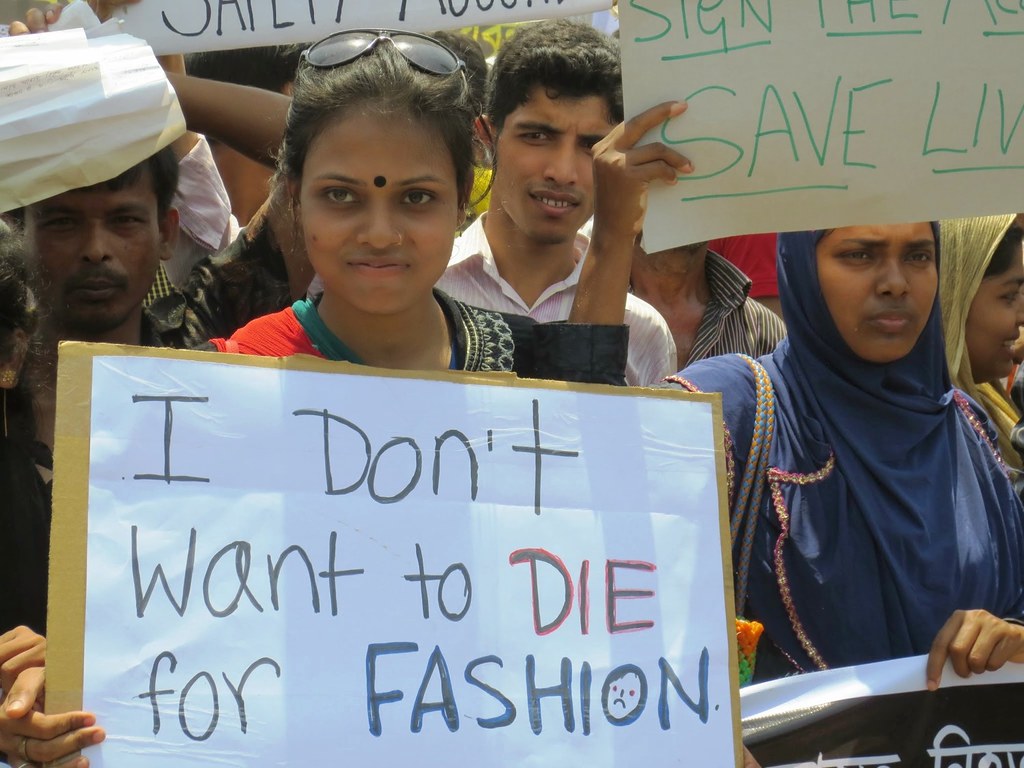
Photo: Solidarity Center/CC BY-ND 2.0


What Bangladesh-US deal reveals about trade politics
The recently concluded Bangladesh-United States trade agreement underscores a familiar reality of contemporary trade diplomacy: when negotiating with Washington, leverage matters more than aspirations.
US-Bangladesh trade deal: Check key terms of the pact agreed between Trump and Yunus
Bangladesh and the United States signed a trade deal to strengthen the bilateral economic relationship, slashing reciprocal tariffs on India's neighbour to 19 per cent after nine months of negotiations.
Why US-Bangladesh rushed through a pre-election trade deal
The "Cotton-for-Garments" agreement between Us and Bangladesh offers tariff-free access for apparel proportional to Bangladesh’s import of US raw cotton, aiming to ease increased competition and higher tariffs from the US and regional competitors.
India-EU FTA unsettles not only Pak but also Bangladesh
The EU–India Free Trade Agreement (FTA) has raised concerns in neighboring countries Bangladesh and Pakistan, as it grants Indian goods duty-free access to 93% of the European market. This threatens the competitive advantage these nations have long held in European textile exports, which are vital to their economies.
Bangladesh aims to finalise FTA with Malaysia in 2026
Bangladesh aims to expand trade and investment cooperation with Malaysia, with finalising the long-discussed Free Trade Agreement as its top priority this year.
Bangladesh keen to pursue FTA with Thailand: Adviser Bashir
While Bangladesh Commerce Adviser enthusiastically touted a potential FTA with Thailand as a game-changer for maritime and logistics connectivity—aiming to supercharge bilateral trade and investment—such optimism warrants scrutiny amid Bangladesh's persistent economic hurdles like infrastructure bottlenecks and regulatory red tape.
Bangladesh begins gap analysis to fit in RCEP trade standards
Bangladesh begins a critical gap analysis of its economic strengths for aligning its trade policies with protocols of the Regional Comprehensive Economic Partnership (RCEP) for joining the world's largest trade bloc.
The curious case of S Alam and our investment treaty regime
The S Alam arbitration should therefore be seen not simply as a legal challenge but as a policy signal.
Tariff agreement to be signed upon White House approval
The principal negotiations on the US-Bangladesh reciprocal tariff reduction agreement concluded at the end of July, with the process expected to be promptly completed once the White House grants its approval.
Bangladesh moves to sign FTA with EU to secure post-LDC trade privileges
The interim government of Bangladesh has launched an initiative to sign a free trade agreement (FTA) with the European Union, Bangladesh's largest export destination, in a bid to safeguard privileged access to its market after graduating from the least developed country (LDC) category in 2026.