


Bangladesh


While Bangladesh may not appear to be a major player on the bilateral FTA front, it is currently under many pressures and involved in various discussions:

- The government was dealt harsh arrangements from the EU in the two parties’ trade and development cooperation agreement of 2001, through which Dhaka accepted WTO-plus demands [from the EU->405], for instance to allow corporate monopoly rights over seeds (patenting);
- The government was in controversial talks with the US over a Trade and Investment Framework Agreement, a preliminary to a possible FTA with Washington; but decided not to sign one in 2010 after several years of discussions. The US subsequently asked Bangladesh to sign a Trade and Economic Cooperation Forum deal, but this has not yet been signed;
- India has been pushing for a bilateral FTA with Bangladesh, but the World Bank has made clear that India would benefit more;
- Pakistan has been pushing for an FTA with Bangladesh as well;
- Bangladesh, for its part, is interested in developing an FTA with China.

Apart from all these, the government is either negotiating or considering negotiating FTAs with Iran, Turkey, Bhutan, Malaysia, Morocco and Sri Lanka.

On a regional level, Bangladesh is a member of SAARC, which has its own FTA, as well as BIMSTEC, which also aims to develop one.

last update: May 2012
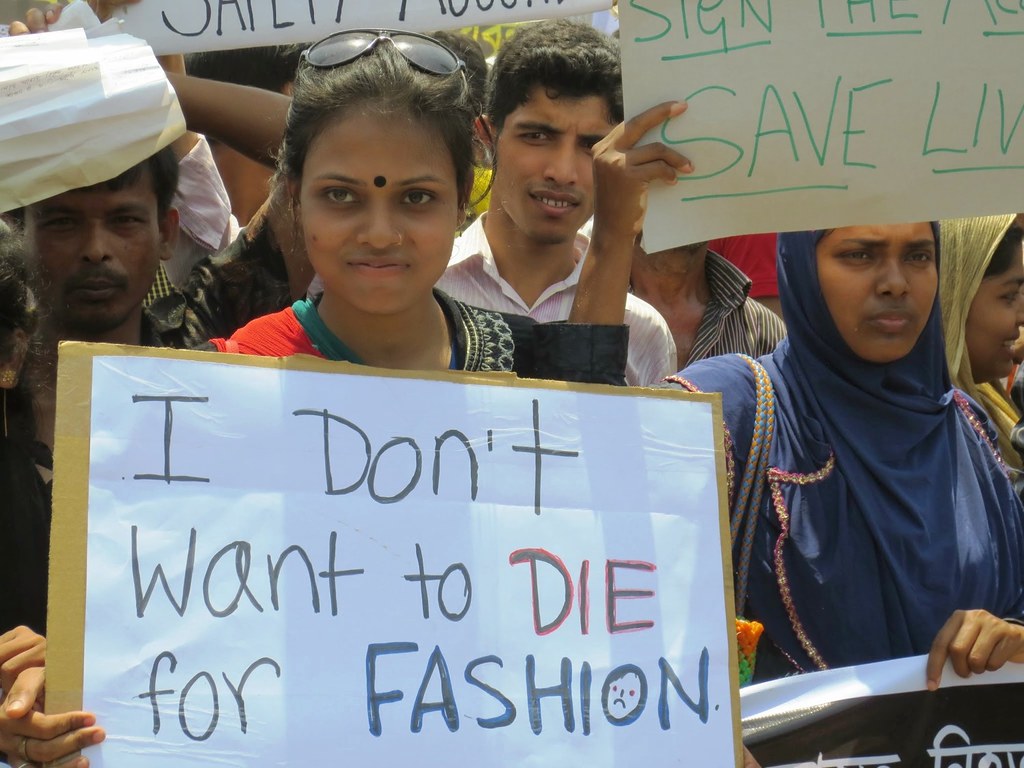
Photo: Solidarity Center/CC BY-ND 2.0


Govt to focus on FTA, PTA, EPA with partners to address post-LDC challenges
Bangladesh’s efforts are underway to finalise trade and investment partnership and cooperation agreements with potential partner countries – such as Free Trade Agreements, Preferential Trade Agreements and Economic Partnership Agreements – in line with regional trade arrangements.
Call for cancellation of US trade agreement
The Committee for Democratic Rights called on the prime minister and all members of parliament to demand for taking steps for the cancellation of the Agreement on Reciprocal Trade between Bangladesh and the United States.
Bangladesh pushes for free trade with Russia as foreign ministers meet in Moscow
Bangladesh’s Foreign Minister requested Russian support for concluding a free trade agreement between Bangladesh and the Eurasian Economic Commission.
Turkish FM arrives today: Dhaka eyes investment in public mills, FTA
During a high-level official visit to Dhaka, Bangladesh and Türkiye are moving to elevate their relationship through advanced free-trade discussions and targeted non-traditional export expansion.
Bangladesh, Morocco to broaden cooperation in trade, investment
Bangladesh and Morocco have agreed to deepen bilateral ties by expanding cooperation across trade, investment, agriculture, and skills development, while exploring a potential Free Trade Agreement. Key initiatives include establishing a reliable Moroccan phosphate supply chain for Bangladesh's food security and a planned Moroccan business delegation visit by the end of 2026.
New Zealand assures post-LDC trade access for Bangladesh
Both countries also showed interest in exploring the possibility of signing a trade deal, such as a free trade agreement, to boost investment and bilateral trade, according to a statement from the commerce ministry.
Does the US-Bangladesh trade deal mirror colonial economics?
The modern US trade, defense, and energy agreements with Bangladesh mirror the exploitative economic structures of nineteenth-century British colonial rule in India. By conditioning market access on the mandatory purchase of American cotton, military hardware, aircraft, and LNG, these deals subtly compromise Bangladesh's policy independence.
Bangladesh moves to sign FTA with S Korea
Commerce Minister Khandakar Abdul Muktadir said Bangladesh is moving forward with discussions to sign a Free Trade Agreement with South Korea to boost exports and strengthen bilateral trade ties.
How Asia negotiated with Washington while Bangladesh lost out
The US Supreme Court’s decision did not end U.S. trade pressure—it merely reshaped it. What was once a patchwork of negotiated exclusivity has been replaced by a universal, unrelenting tariff regime. Asian nations now face a new reality: no deal is safe, no concession is final, and strategic certainty remains out of reach. The US isn’t just reducing tariffs—it’s reengineering Asia’s economic integration into a strategic tool.
US-Bangladesh trade deal may obstruct Bangladesh’s renewable energy growth
The US - Bangladesh agreement risks locking Bangladesh into costly LNG dependency, potentially undermining its renewable energy goals and energy security, especially given current renewables capacity of just 1,743 MW—mostly reliant on Chinese solar tech.