

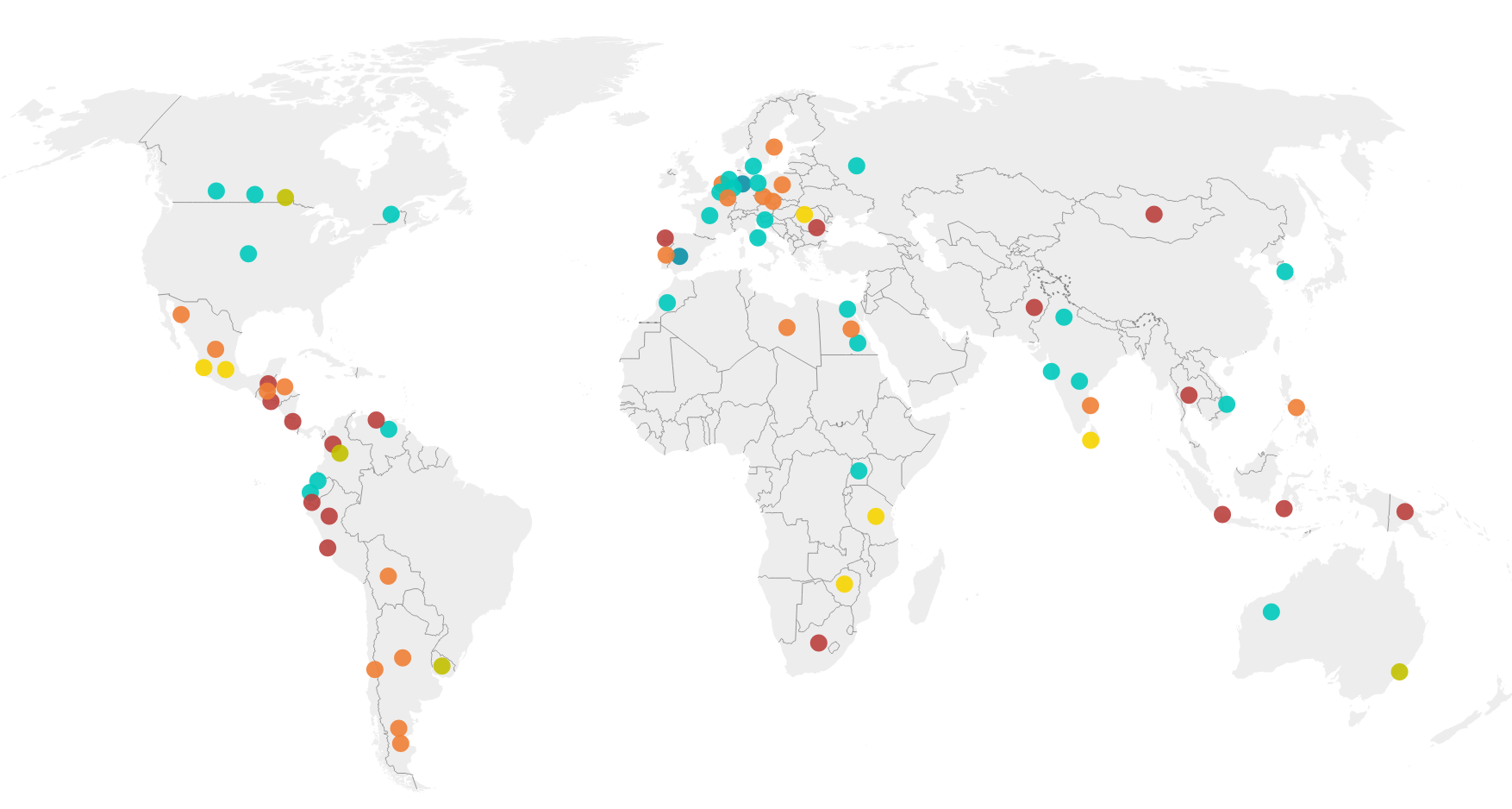
ISDS Case Map

This agreement is controversial in Australia because it increases entry of temporary Chinese workers in a large number of occupations, without testing first if local workers are available. There are also provisions for Chinese companies with projects worth over $150 million to negotiate the number of foreign workers they bring in as well as their pay and conditions. This is the first time an arrangement which could allow most of the workforce to be imported has been included in any Australian trade agreement. It is unclear whether recent changes to the regulations of Australia’s Migration Act will be sufficient to ensure that such workers are not exploited.
Temporary migrant workers in Australia are already at a high risk of exploitation. There have been a number of studies showing exploitation of temporary workers, working long hours in dangerous conditions at less than minimum wages. Without greater protections in place there are concerns that increased numbers of temporary workers negotiated through trade agreements could lead to more cases of exploitation.
One important impact of the agreement is how it will open the doors to more Chinese investment in Australian agriculture. China is looking to secure its food supply by investing in agribusiness abroad, whether by investing directly in farms or buying into supply chains. Australia is an important source of meat and to a lesser extent dairy for China, and so ChAFTA is expected to boost Chinese deals in Australia's livestock industry.
The ChAFTA is also controversial because it contains Investor-State Dispute Settlement (ISDS) provisions, which allow foreign investors to bypass national courts and sue governments before an arbitration tribunal for compensation if they can argue that changes to law or policy harm their investment. This gives increased power to corporations at the expense of democracy and the public interest.
Contributed by AFTINET
last update: March 2016
Photo: PughPugh/CC BY 2.0
Corporate lobby group promoting Australia's business interests towards China
The bilaterals.org team is pleased to announce the launch of an upgraded version of the website and its content management system.
Click here for more information.