

EU-India


The European Union and India launched negotiations on a bilateral free trade and investment agreement in June 2007. However, between the governments, a number of controversies have been plaguing the talks. Delhi wants Brussels to relax its stringent food safety criteria which penalise Indian farm and fishery exports and to make it easier for Indian professionals to work in the EU. Europe is primarily out to win major openings of India’s services sector and broad liberalisation of foreign investment, while India does not want to discuss allowing European firms to compete in India’s government procurement market.

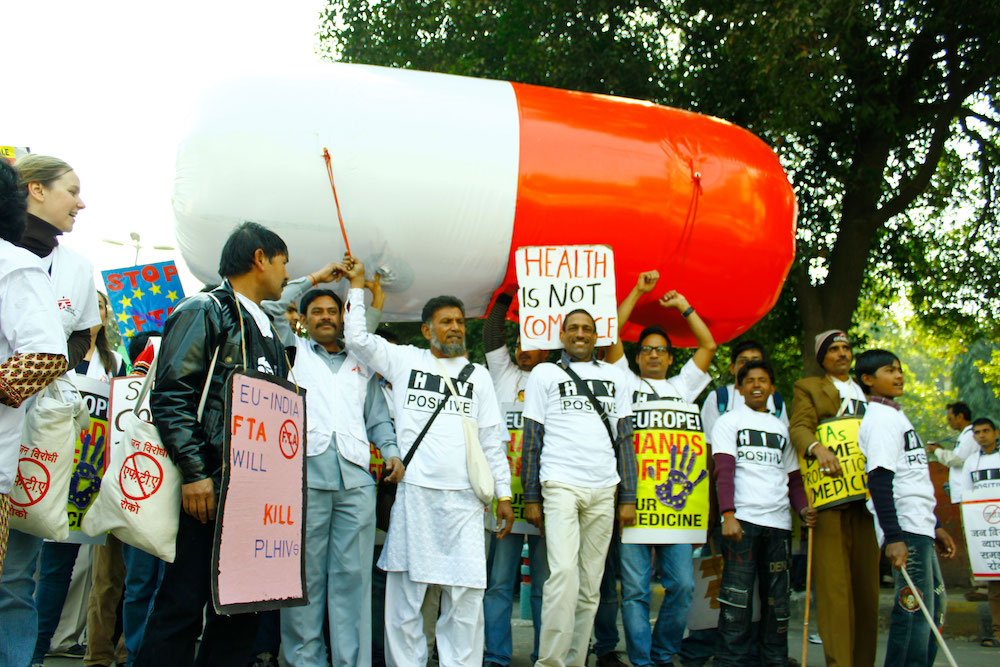
Indian social movements, including fisherfolk and labour unions, people living with HIV/AIDS and other health activists have been mobilizing against the FTA. International actions and campaigns have particularly targeted the proposed intellectual property provisions of the agreement, and the impact of the FTA on access to medicines.

last update: May 2012
Photo: MSF


India-EU free trade agreement poised for swift approval | International
Germany's optimistic framing of the India-EU Free Trade Agreement glosses over deep-seated regulatory and political friction. Ambassador Ackermann’s prediction of an expedited legislative passage downplays the European Parliament's history of stalling deals over strict environmental and human rights standards—areas where India and the EU frequently clash.
India-EU free trade deal to be inked by year-end: Ursula von der Leyen
India and the European Union will sign the ambitious free trade agreement by the end of this year, top EU leader Ursula von der Leyen said after holding talks with Prime Minister Narendra Modi.
EU hints at investment agreement with India at European Round Table for Industry
Ursula von der Leyen, President of the European Commission, on Sunday hinted at an investment agreement with India at a joint press meet at the European Round Table for Industry in Sweden's Gothenburg
EU pushes for investment pacts in landmark India free trade deal
The EU's Ambassador to India, Herve Delphin, has called for an investment liberalisation chapter in the new EU-India FTA and the finalisation of a separate investment protection pact, terming them "unfinished business" for the landmark deal.
EU-India trade deal raises new concerns for Bangladesh apparel sector
Bangladesh’s apparel exporters are facing fresh concern after the European Union and India reached a free trade agreement, a development industry leaders say could intensify competition in Bangladesh’s largest garment export market.
How India’s new free trade agreement with the EU limits AI governance
The India–EU FTA’s formulation of source‑code and algorithmic provisions appears to narrow India’s policy authority, as it shifts the balance towards post‑incident enforcement and away from proactive oversight, at a time when India’s scale and diversity require the opposite.
How EU's CBAM expansion is adding new challenges for India despite the FTA
The India-EU Free Trade Agreement, exposes Indian manufacturers to the EU’s Carbon Border Adjustment Mechanism (CBAM), which could impose over $1.1 billion in annual costs by 2028. Despite a €500 million EU decarbonisation fund, Indian SMEs face a major challenge due to lack of granular emissions data and no special exemptions under CBAM.
DNP+ and MSF welcome the removal of harmful IP provisions in EU-India FTA , but call for continued vigilance
Delhi Network of Positive People (DNP+) and Médecins Sans Frontières (MSF) notes positively that the intellectual Property (IP) chapter of this trade deal largely preserves India’s public health safeguards and does not include any harmful provisions that go beyond the World Trade Organization’s TRIPS agreement, such as data exclusivity or patent term extensions.
EU-India FTA text (Feb 2026)
India-EU FTA: What the deal means for digital trade and intellectual property rights
The deal points to creating a secure digital trade environment by promoting paperless transactions and cyber-security .