

ISDS Case Map

The European Union and the Andean Community (Comunidad Andina de Naciones or CAN) have been working towards a bilateral trade and investment pact since 1993, when they first signed a Framework Cooperation Agreement. In Rome in 2003, ten years later, they signed a joint commitment to formally enter into an Association Agreement, “including a Free Trade Agreement (FTA).” This was reaffirmed at the highest political level in Guadalajara in 2004. In May 2006, both sides agreed to initiate the negotiating process as soon as possible. The Andean Community is composed of Bolivia, Colombia, Ecuador, and Peru. (Venezuela withdrew in 2006.)
In April 2007, the EU adopted its negotiating mandate for the process. The draft is available [here->8334]. Negotiations started in May 2007. Three rounds of negotiations have taken place so far. The second round was held in Brussels in December 2007 and the third in Quito in April 2008.
The fourth round was suspended in the face of opposition from the Bolivian and Ecuadoran governments, causing a great deal of tension within CAN.
Confronting this set of circumstances (cancellation of the fourth round of negotiations), Andean and European social organizations issued the following statement: “Under these conditions, we hold that it is politically unviable and economically unwise to continue the negotiations while the situation described remains in effect. The governments of Colombia and Peru must listen to the demands of their civil society organizations and of the presidents of Bolivia and Ecuador, which call for reorienting the direction, content, and conduct of the negotiations with the European Union. If the existing negotiating framework remains in place and the political situation of CAN is not given due recognition, this integration process will be further weakened, and once again the governments will be acting with disrespect for civil society and its rights”.
In the EU’s conception, the Association Agreement has three components: an FTA, a cooperation agreement, and a forum for political dialogue. However, the EU’s prime concerns are clearly the FTA and the opening of markets for European corporations (even in areas of “cooperation”).
According to GRAIN’s analysis, the objectives pursued are: reduction of taxes on foreign business activity, including import and export tariffs; opening up the country to uncontrolled trade flows; changing quality standards and technical standards; simplifying and restricting the use of sanitary and phytosanitary measures; providing unrestricted access to raw materials, especially minerals; “maximum possible protection” for intellectual property rights; opening up of all economic sectors and aspects of national life to European investment; direct or indirect privatization of all public services and government-owned corporations; obligation on the part of governments to put all procurement and contracts out to international tender; elimination of policies and programs to support and protect economic activities and domestic products.
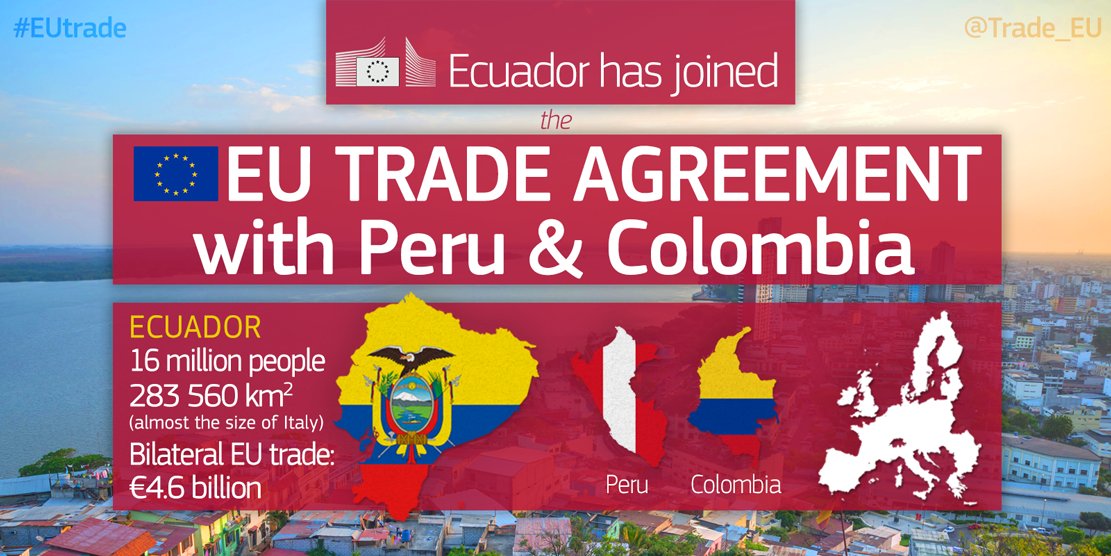
After Bolivia and Ecuador refused to sign an FTA, the EU continued negotiations bilaterally with Peru and Colombia. In April 2011, Colombia signed onto a text with the EU and the deal with Peru is in force on a provisional basis even though both await ratification by the European Parliament. I the meantime, Ecuador, which upholds an anti-FTA position, continues having conversations with the EU towards a possible agreement.
last update: May 2012
Photo: EU Trade/Twitter
Justice for Colombia, with the support of the UK and European trade union movement, is campaigning to stop the Free Trade Agreement between the European Unio...
The bilaterals.org team is pleased to announce the launch of an upgraded version of the website and its content management system.
Click here for more information.

