

Institutional Sign-On: Tell Panama's President to Reject Negotiations with First Quantum
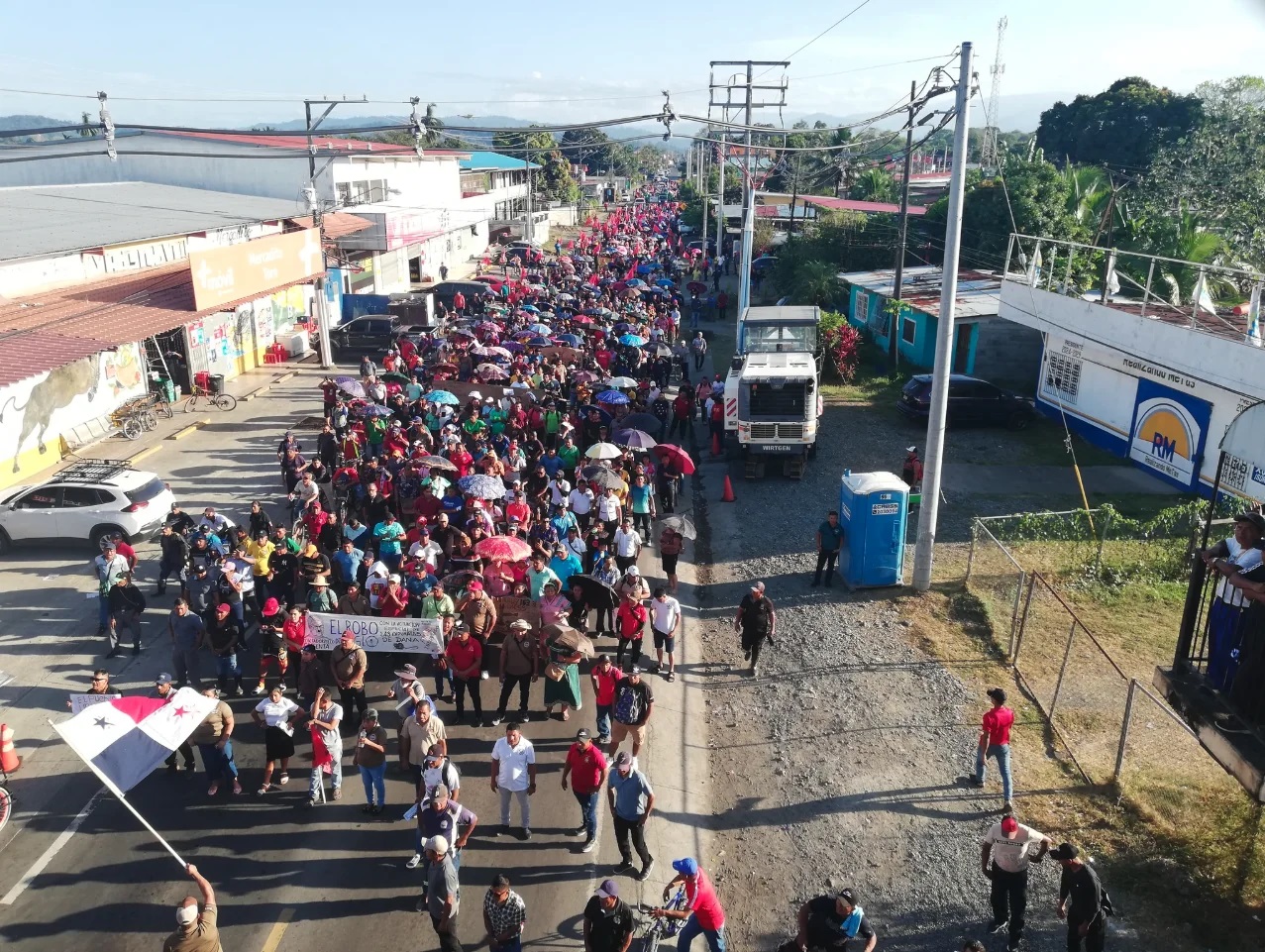
Social organizations in Panama and international allies are promoting a petition to the Panamanian government, urging President José Raúl Mulino to reject any negotiations with First Quantum Minerals to reopen the Cobre Panamá mine, whose contract was declared unconstitutional by Panama's Supreme Court in 2023. The organizations behind the petition argue that the multimillion-dollar lawsuits filed by the company through international investor-state arbitration mechanisms are intended to pressure the government into reversing sovereign decisions and disregarding both the court ruling and the existing mining moratorium. They further state that the mining operation has generated social conflicts, environmental impacts, and legal controversies, and therefore call on the government to respect the popular will against mining, maintain the mine's closure, and develop a definitive and safe closure plan.
Sign the petition at this link. (Sign-on deadline: June 8th, 2026)
Versión en español aquí.
Dear President Raúl Mulino,
We, the undersigned international organizations, are deeply concerned about the possible reopening of the Cobre Panamá mine. The mine, owned by the Canadian mining company First Quantum Minerals, has been suspended since November 2023, when the Supreme Court of Justice in Panama ruled that the mine’s contract was unconstitutional. Due to widespread public opposition to the mining industry in the country and its harmful effects, Panama’s then President, Laurentino Cortizo, enacted a mining moratorium prohibiting the approval of new mining contracts.
In the early months of 2024, several mining companies and suppliers began to resort to the Investor-State Dispute Settlement (ISDS) system. This system allows transnational corporations to sue the state when they feel their interests have been harmed by measures taken by state agencies. Their goal is to demand compensation for their investments, as well as for their expected future profits. Arbitration proceedings or the threat of arbitration can unfairly influence or pressure the state into reversing its decisions or making decisions that favor their businesses. This is known as the “chilling effect,” because they can paralyze government decisions considered harmful to their interests, regardless of whether these decisions are in favor of the environment or the common good. Transnational corporations can resort to arbitration even when they have been sanctioned by the country’s courts, as is the case with the Cobre Panamá mine.
In this case, lawsuits totaling more than $25 billion are currently pending from the Canadian companies First Quantum Minerals and Franco Nevada, as well as the South Korean company Korea Mine Rehabilitation and Mineral Resources (KOMIR). In response to these multimillion-dollar lawsuits, Panama’s new president, José Raúl Mulino, said he would be willing to negotiate with First Quantum Minerals if they withdrew their lawsuit. This is highly concerning and demonstrates how this arbitration mechanism is being used to force negotiations under duress, with the aim of undermining the authority and 2023 ruling of the Supreme Court, and to violate the will of the Panamanian people, who have repeatedly made clear that harmful mining is not the kind of development they want in their country.
The operations of First Quantum Minerals and its partners in the country have sparked nationwide protests, two court rulings against their contracts, human rights violations, and several penalties for environmental violations. Despite this, they are attempting to pressure the Panamanian government to reopen the mine by using an exclusive and unfair arbitration system. In this regard, David Boyd, during his tenure as the UN Special Rapporteur on human rights and the environment, stated that “ISDS claims have devastating consequences for a wide range of human rights, exacerbating the disproportionate harms suffered by vulnerable and marginalised populations,” and has been “a catastrophe for the development, implementation, and enforcement of laws, regulations, policies, and environmental permitting decisions necessary to address the planetary crisis.”
For all these reasons, we call on the Panamanian government to:
- Work with civil society and the communities surrounding First Quantum Minerals’ concession to develop a safe and definitive closure plan for the Cobre Panamá mine;
- Respect the 2023 Supreme Court ruling and the mining moratorium, and insist that mining companies operating in the country, such as First Quantum Minerals, also respect national laws. This includes denying a new contract or reopening under any other administrative model;
- Reject any avenue that attempts to reopen the mine, be it through billion-dollar lawsuits meant to pressure the government to negotiate or any other means.
For several years now, the Panamanian people have made clear their opposition to mining in the country. The Panamanian government must respect the will of the people and ensure compliance with the decisions of the Supreme Court, the laws it has sovereignly enacted, as well as the mining moratorium and its regulations.