
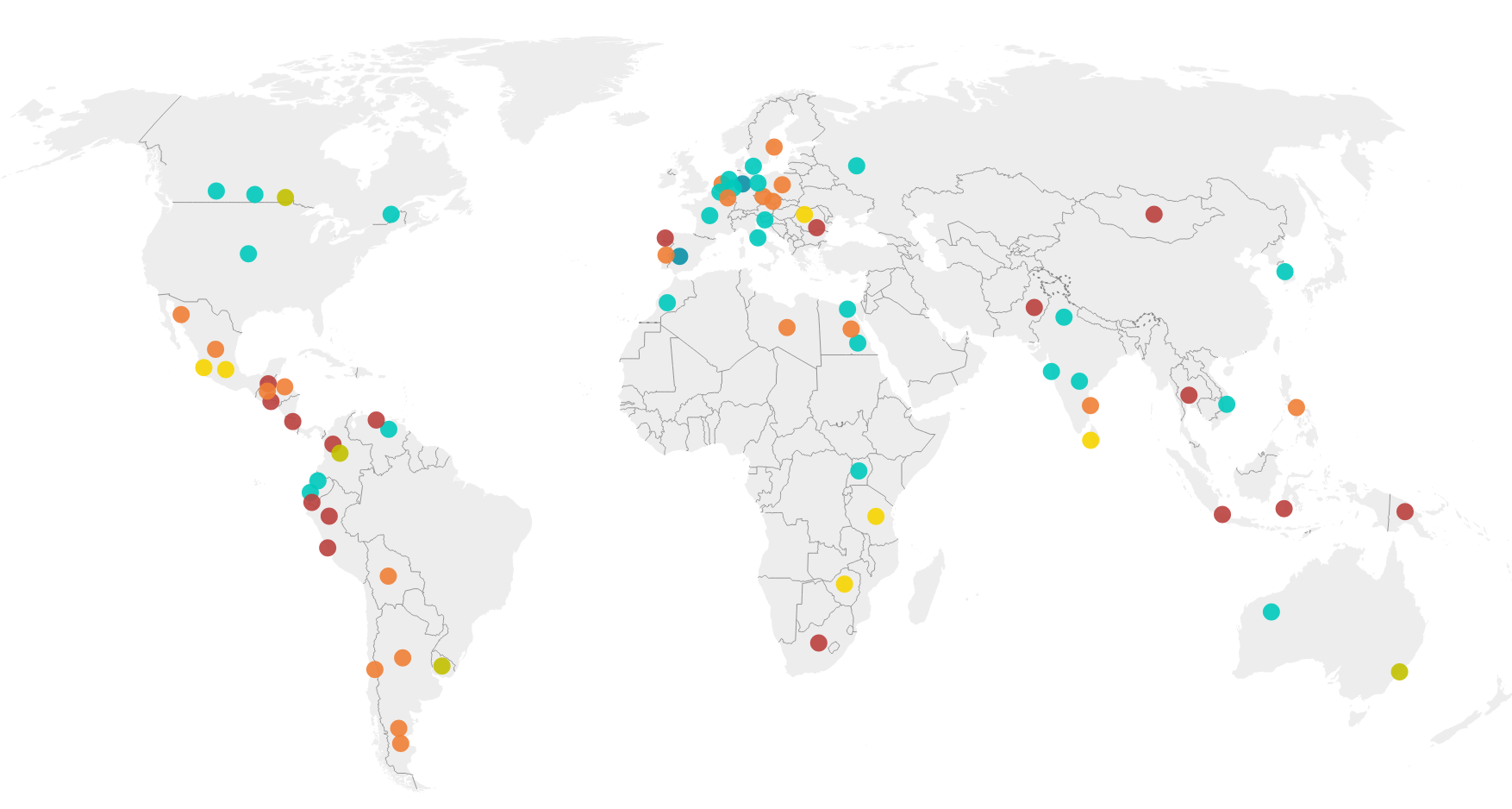
ISDS Case Map

In West Asia, trade and investment agreements have either been pushed by regional blocs or individual powers, such as Israel, Türkiye or the UAE. They primarily serve the interests of the region’s corporations and elites to the detriment of communities and the environment. Although resistance from social movements does exist, it has been less visible than in other regions due to the authoritarian nature of most of the region’s governments.
One of the oldest initiatives is the Greater Arab Free Trade Area or the Pan-Arab Free Trade Area (GAFTA) launched by the Arab League in 1978 and coming into force in 1998. Since 2005 the elimination of almost 100% tariffs on most agricultural and industrial goods among the GAFTA members was enforced. The 18 states that are members are: Algeria, Bahrain, Egypt, Iraq, Jordan, Kuwait, Lebanon, Libya, Morocco, Oman, Palestine, Qatar, Saudi Arabia, Sudan, Syria, Tunisia, the United Arab Emirates and Yemen. Comoros, Djibouti, Mauritania and Somalia are candidates for membership.
The Gulf Cooperation Council (GCC) includes Bahrain, Kuwait, Oman, Qatar, Saudi Arabia, the United Arab Emirates, with Yemen participating only in limited GCC affiliated bodies. The GCC has dealt head-on with bilateral free trade agreements (FTA) at various levels. Some of its members, such as Bahrain and Saudi Arabia have signed bilateral treaties with foreign powers like the United States. As a group, the GCC has established FTAs in 2008 with Singapore and the European Free Trade Association (EFTA) and with Pakistan in 2023. The GCC is currently negotiating other FTAs with ASEAN, China, Japan, India, Indonesia, Malaysia, New Zealand, and the UK.
The GCC signed an Economic Cooperation Agreement with the European Union in 1988 and started negotiations on a bilateral free trade agreement in 1990. But those were dropped in 2008 due to the EU’s insistence on political demands, pushed by civil society groups, such as the International Federation for Human Rights. In the UK, civil society groups have criticised the GCC-UK deal under negotiation for ignoring human rights and climate issues.
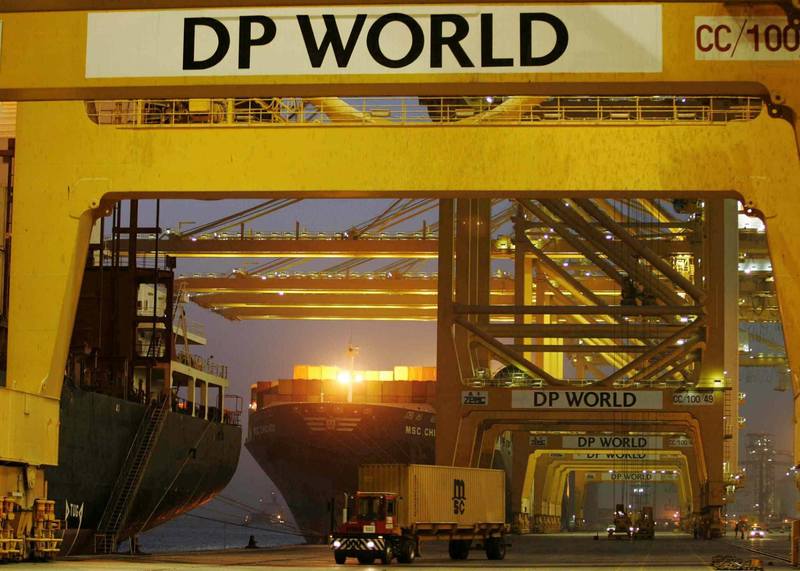
As part of its strategy to diversify its economy parallel to fossil fuels and consolidate its geopolitical position, the United Arab Emirates (UAE) has pushed aggressively to forge bilateral trade deals, dubbed Comprehensive Economic Partnership Agreements (CEPAs), and investment treaties. It has signed 32 CEPAs with countries spread across different regions and active negotiations are underway. Already an established business and tourism hub, the UAE seeks to consolidate its status as a financial powerhouse and expand into sectors such as clean energy, technology and agribusiness. Food security is a critical geostrategic concern for the UAE, given its reliance on food imports. Through a tightly controlled network of ports and logistics platforms, and new CEPAs, the UAE aims to become a central hub in the global agri-food trading system, where corporations can import and re-export products across Asia, Africa and Europe quickly and duty-free.
In 2025, civil society mobilisation pressured members of the European Parliament to call for an end to negotiations on the EU-UAE trade deal, amid concerns about potential arms sales to the UAE-backed paramilitary force, the Rapid Support Forces (RSF), which has been accused of committing war crimes in Sudan.
Another GCC state pushing for trade deals is Saudi Arabia. In 2025 alone, it signed a trade agreement with South Sudan and investment treaties with Egypt, Syria and Uruguay. It also started negotiations for bilateral investment treaties with India and Hong Kong, as well as an FTA with Thailand. Meanwhile, Oman signed an FTA with the US in 2006 and another with India in 2025.
Iran only signed a free trade agreement with the Eurasian Economic Union (EAEU) in 2025, and maintains preferential trade agreements with Türkiye and Pakistan.
Israel has signed FTAs with countries or regional blocks such as: Canada, Colombia, Costa Rica, Guatemala, EFTA, the EU, Jordan, Mercosur, Mexico, Panama, South Korea, Türkiye, Ukraine, the UAE, UK, US and Vietnam. Negotiations are ongoing with Bahrain, China, India, Moldova, Serbia. It is also exploring possibilities with Australia, Japan and Thailand. Israel uses trade agreements to expand the sphere of influence of its transnational corporations, most of which have grown out of the illegal occupation of Palestine.
The Justice for Palestine European Citizens' Initiative called for the suspension of the EU-Israel Association Agreement in response to Israel’s numerous human rights abuses during the war in Gaza, as well as its breaches of multiple rules and obligations under international law. The campaign received one million signatures. Similar calls have been made by the European Trade Justice Coalition, European trade unions, and hundreds of civil society groups. Over the past couple of decades, social movements in other countries that have signed free trade deals with Israel have mobilised in solidarity with Palestine. Examples include actions in Canada, Costa Rica, India, Mercosur. A major victory for the movements was achieved in Colombia in 2025, when the country cancelled its FTA with Israel.
Türkiye has also developed a vast network of free trade agreements. It has FTAs in force with: Albania, Bosnia-Herzegovina, Chile, EFTA, Egypt, Faroe Islands, Georgia, Kosovo, Malaysia, Mauritius, Montenegro, Moldova, Morocco, North Macedonia, Palestine, Qatar, Serbia, Singapore, South Korea, Tunisia, the UAE, the UK, and Venezuela. FTAs with Lebanon, Sudan and Ukraine are under ratification, while negotiations are ongoing with the GCC, Indonesia and Japan.British and Turkish unions demanded in 2021 the suspension of the UK – Türkiye trade deal due to labour rights violations in Türkiye.
Last update: May 2026
Photo: DP World