


Across the board

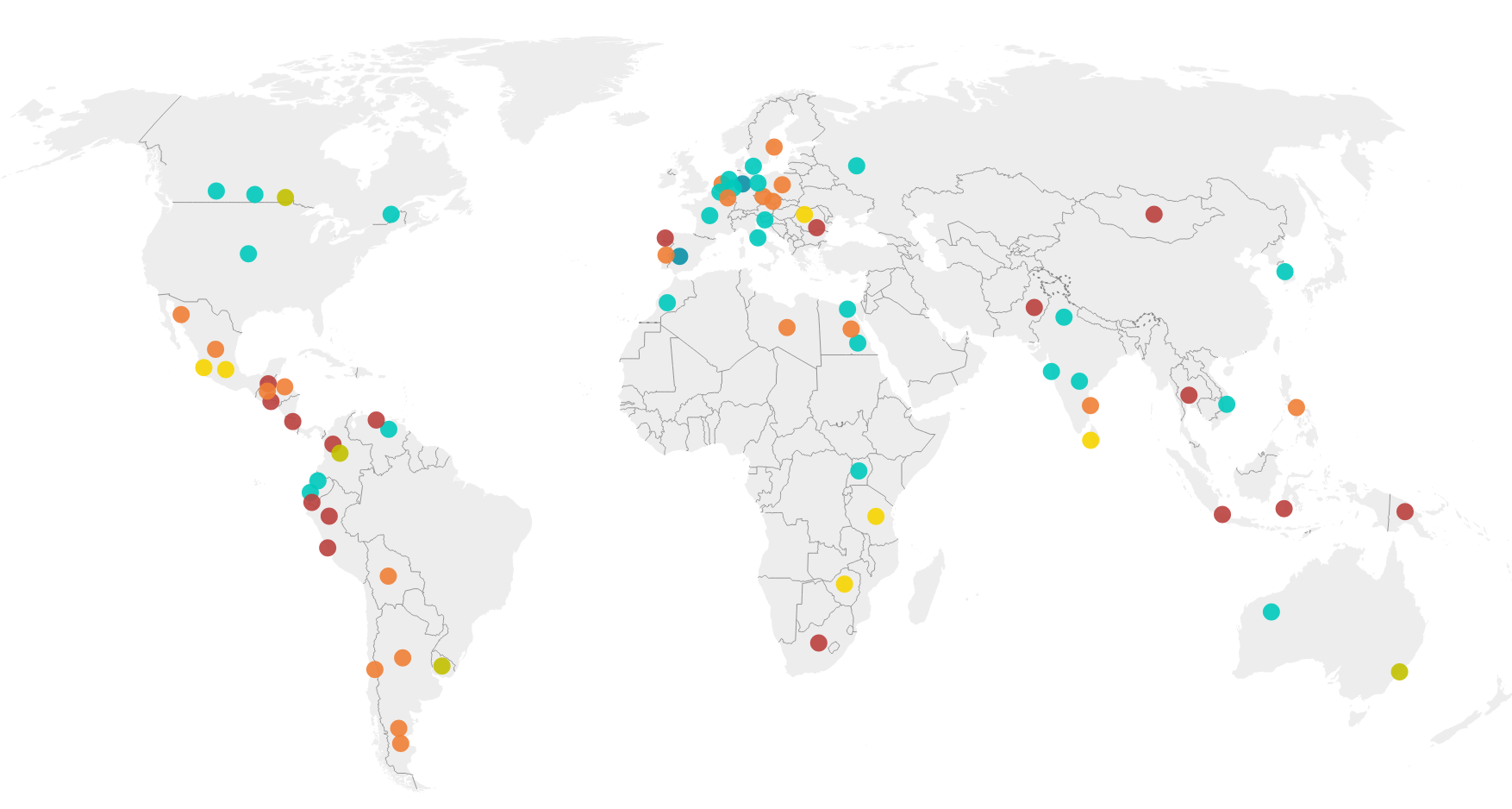
This section contains news and analysis of sweeping developments that affect the overall push and pull towards FTAs and bilateral investment treaties. This means major trends relating to bilateralism, often with global consequences, and other cross-cutting issues. New developments arising from US politics, the WTO or South-South alliance-building, for instance, are often reported here as they tend to have systemic impacts.

last update: May 2012


The Doha deal breaker
In our free trade gone-wild world, property rights are being applied in areas where they have never before existed and may not pertain (such as intellectual products, services, biodiversity, genetics), and governments have not learned to use their sovereignty to advance multilateralism for both their individual interests and the global common good. There must be a new starting point, based on the recognition of an added dimension in world trade -- the realisation that some goods are private (commercial), some are public (governmental), and others are common (for the benefit of people everywhere).
Bilateral trade-off
The latest sign that the postwar era of "multilateral" trade liberalization has ended came last week in Singapore.
CKUT - Off the hour - collapse of WTO talks
Interview with Aziz Choudry on the collapse of WTO talks in Geneva, and what's happening with FTAs, aired on CKUT Radio's Off the Hour, Tuesday edition, 5 August 2008.
Former USTRs talk trade
Four former architects of US trade policy, sharing nearly 20 years of negotiating experience between them and spanning three administrations, laid out to Congress last week their blueprints for a future agenda.
'Doha Round talks undermining regional integration'
The ongoing Doha round of World Trade Organisation talks is seen to be undermining regional integration and economic development efforts by African countries, analysts have noted.
WTO decision in next 3 days may worsen FTAs' effects on developing country farmers
The special safeguard mechanism currently being proposed for agriculture at the WTO mini-ministerial requires large increases in imports before it can be used, does not allow tariffs to be raised sufficiently and cannot be used to protect developing country farmers from import surges due to free trade agreements.
African, Latin American ministers discuss South-South trade
Trade ministers from Africa and Latin America met last week in Marrakesh to discuss the state of South-South trade. Despite recent advancements, trade between developing countries remains low.
Hard bargains: Bilateral trade pacts draw domestic objections
The fear of having other countries steal a march on Washington by signing their own deals may bring Congress back to the bilateral trade negotiating table.
Progressive Dems break with trade consensus, demand a change of course
Rep. Michael Michaud and Sen. Sherrod Brown, both US Democrats, have introduced legislation to put the brakes on US free trade agreements by triggering a review of existing agreements as well as providing a process for renegotiating them.
The failed expectations of US trade policy
As the principal negotiator for the landmark market access agreement that led to China's accession to the World Trade Organization (WTO), I have reflected on whether the agreements we negotiated really lived up to our expectations. A sober reflection has led me to conclude that those trade agreements did not.