

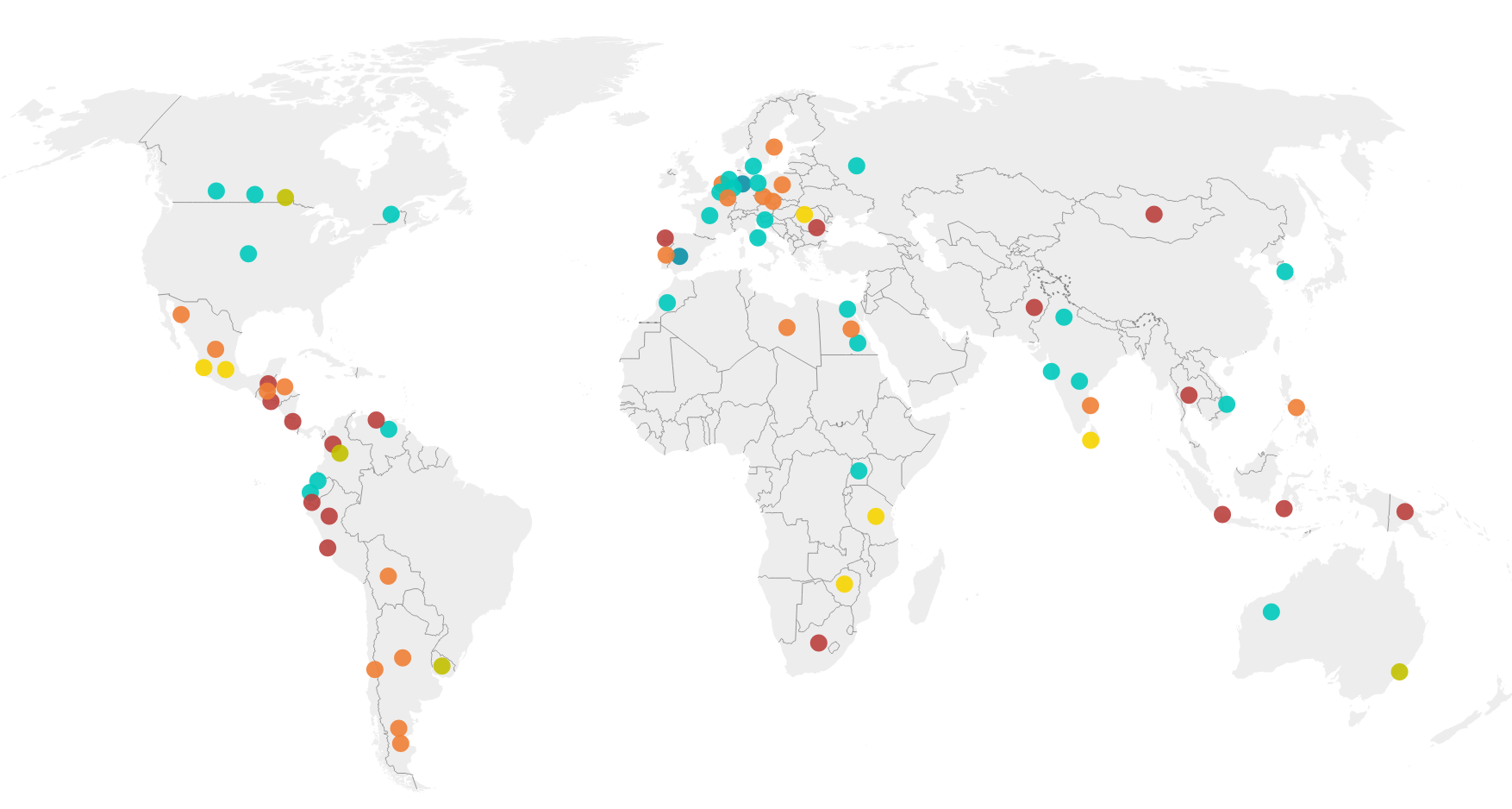
ISDS Case Map

Africa is at the heart of the major contradictions that shape international trade. Although integration into the global market has long been promoted as a crucial step in Africa's development, in reality it has placed African states in the position of recipients rather than architects of trade agreements. The result is a complex web of treaties in which the remnants of colonial relations coexist with new regional frameworks, such as the African Continental Free Trade Area (AfCFTA), as well as a multitude of aggressive agreements concluded with both old and emerging imperialist powers. These dynamics have reignited historical criticisms concerning the extraction of resources, the dismantling of local industries and the erosion of food sovereignty. This has damaged the most fundamental rights and sparked growing social resistance at both the local and transnational levels.
In the 1990s, the European Union (EU) signed association agreements with all the North African countries except Libya. In 2010, the EU signed a specific agreement on agriculture and fisheries with Morocco. However, its implementation has been controversial due to the inclusion of the disputed territory of Western Sahara. Local movements and civil society organisations have criticised the agreement for complicity in the exploitation of the region and denial of the rights of the Sahrawi people for the benefit of multinational corporations and the Moroccan king. In 2016, the EU initiated a project for a deep and comprehensive free trade area (DCFTA) with Tunisia, intended to increase liberalisation by removing tariff and non-tariff barriers in most sectors. However, the DCFTA was rejected due to social and political opposition in Tunisia.
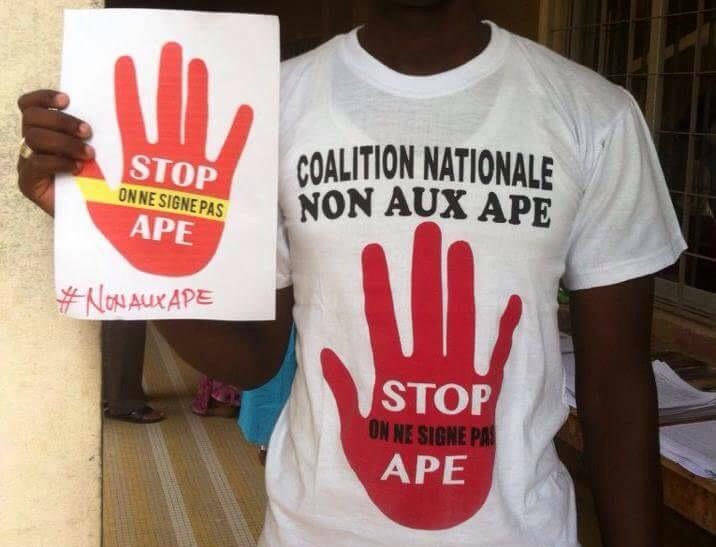
In 2000, the EU and the African, Caribbean and Pacific Group of States (also known as the ACP group) agreed to negotiate a series of Economic Partnership Agreements (EPAs). In Africa, the EPAs were adapted for five regional blocs: ECOWAS for West Africa; EAC for East Africa; AfOA for Eastern and Southern Africa; CEMAC for Central Africa; and SADC for Southern Africa. The EPAs represent the most emblematic framework of historic struggles against free trade on the continent. They have been strongly opposed by coalitions of peasant, labour and anti-globalisation organisations, who have denounced their neo-colonial nature, as well as the harmful effects of dismantling tariff protections and opening up African markets, which they argue would threaten the survival of family farms and nascent industries. While SADC and AfOA have implemented the EPAs, the EAC, ECOWAS and CEMAC have refused to ratify them. This has resulted in the EU pressuring certain countries to apply them provisionally. Consequently, Ghana, Côte d'Ivoire, Cameroon and Kenya have implemented interim EPAs, thereby fragmenting regional blocs and undermining the coherence of African economic policies. Their implementation remains partial and contested.
Trade relations between Africa and the United States also reveal similar tensions. The African Growth and Opportunity Act (AGOA), which was introduced in 2000 as a preferential programme intended to stimulate development, has been criticised for encouraging the export of raw materials and extractive products (such as oil, minerals and textiles) rather than supporting the development of local processing industries. In practice, AGOA has reinforced economic specialisation dependent on exports to the US market. African labour unions have frequently criticised the hidden structural adjustment clauses that accompany this regime, compelling beneficiary states to open their markets without genuine reciprocity. AGOA was due to expire in September 2025, right in the middle of the trade war triggered by the Trump administration. The US used threats not to renew it as a means of diplomatic pressure, ultimately agreeing to extend it until December 2026.
New powers are also imposing their own trade frameworks on the continent. China, Africa’s leading trading partner, has developed a dense network of bilateral agreements which are often criticised for being opaque, exploitative, and generating debt. While only Mauritius implemented a comprehensive free trade agreement with China in 2021, many African countries signed investment treaties in the 1990s and 2000s. More recently, China has been negotiating more limited trade partnerships. It has signed agreements with South Africa, Kenya and the Republic of Congo, and eliminated tariffs for 53 African countries.
Russia, through the Eurasian Economic Union (EAEU), has also sought to expand its influence on the continent. Since 2023, the EAEU has been negotiating free trade agreements with North African countries, including Egypt, Algeria, Morocco, and Tunisia. Similarly, Turkey has signed free trade agreements with Morocco, Tunisia, Egypt and Mauritius, and is negotiating with several other African countries. The Gulf countries, particularly the United Arab Emirates (UAE), have accelerated their trade relations through Comprehensive Economic Partnership Agreements (CEPAs). The UAE has signed agreements with Egypt (2023), Kenya and Mauritius (2024), and Nigeria, Angola, Chad, the Democratic Republic of the Congo, Gabon, and Ghana (2025 and 2026). Negotiations are ongoing with several other African countries, including Ethiopia and South Africa. While these agreements are presented as instruments of cooperation and investment, they have been criticised for reinforcing foreign control over key sectors such as mining, agriculture, infrastructure, financial services, and healthcare.
Finally, the African Union (AU) is pushing for the full implementation of the African Continental Free Trade Area (AfCFTA) across the African continent. It entered into force in 2021 and has been signed by all but one of the AU's 55 member states, with more than 40 having ratified it. However, its implementation remains limited to partial trade between only ten countries. Although it is presented by its proponents as a tool for pan-African integration and endogenous development, it is nonetheless viewed with suspicion by social movements. These groups fear that it will accelerate the forced opening of national markets without addressing the structural imbalances that benefit African elites and transnational capital at the expense of workers' rights and environmental standards, thereby replicating the pattern of neoliberal free trade agreements denounced in the past.
Last update: May 2026
Photo: Coalition nationale Non aux APE